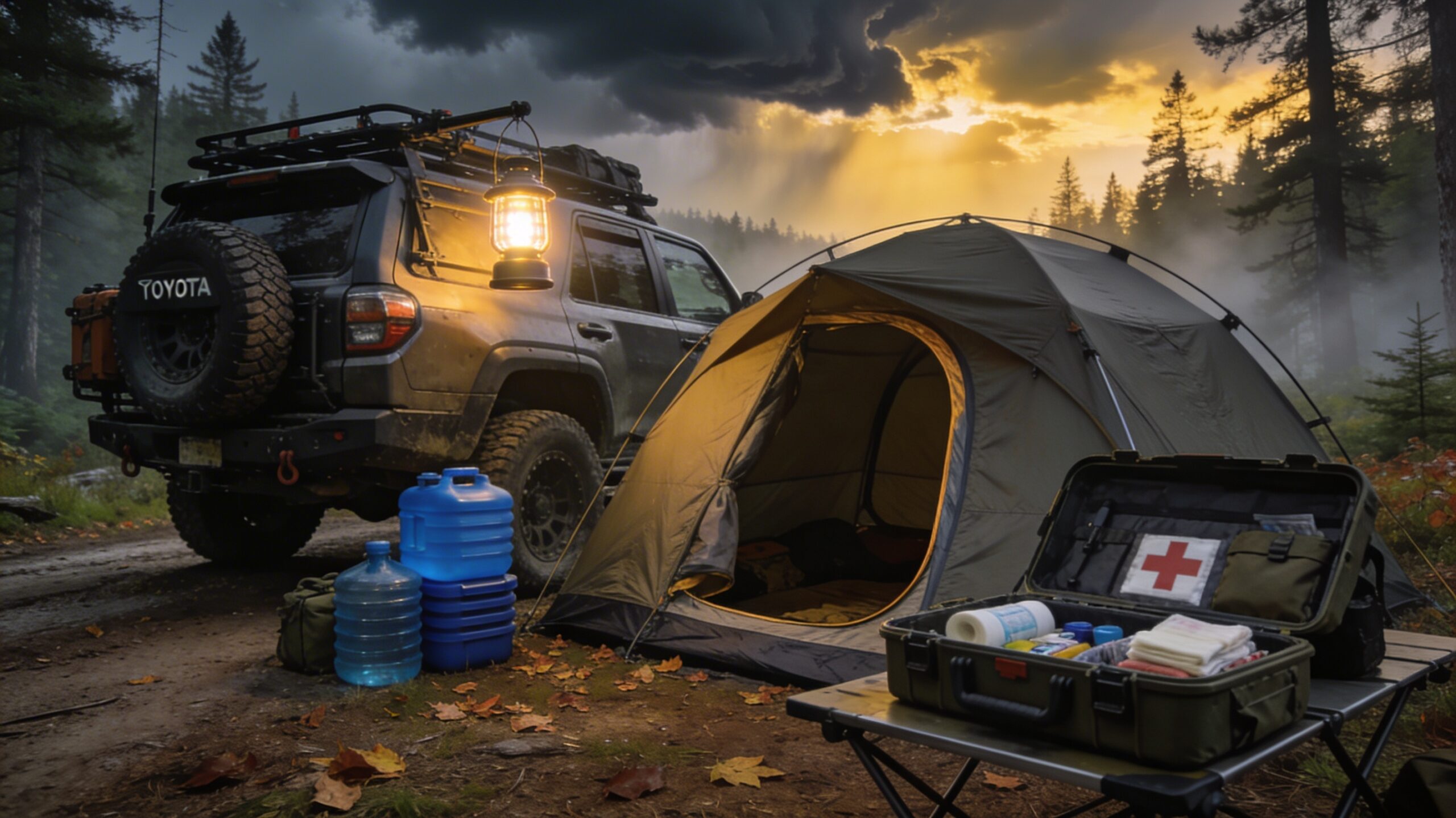
When you’re exploring Michigan’s backroads, the last thing you expect is an injury. But the unpredictability of the outdoors means accidents happen — often hours from help. Whether it’s a blister from hiking, a burn around the campfire, or a cut while working with gear, knowing how to respond is one of the most valuable skills any overlander can have.
Before we go further: we’re not medical professionals. This article reflects personal experience and lessons from the trail. Always seek out certified first aid training before venturing deep into the wilderness.
The Mindset: Stay Calm and Think Clearly
When something goes wrong, your most powerful tool is your mindset. Panic makes even minor injuries worse. Take a deep breath, make sure the area is safe, and assess what’s happening. Prioritize care — handle anything life-threatening first, and treat minor injuries once the situation is under control.
For more on preparation and mindset, check out our article on Trip Planning and Risk Management.
Real Lessons from the Trail
On one of our group trips — ten rigs strong — we had two minor but memorable incidents in a single weekend.
- A simple knife slip during a bushcraft demo led to a nasty hand cut.
- Later, another team member grabbed what looked like dry grass for the fire and ended up sliced by sharp grass blades.
Both injuries were minor and treated with a basic first aid kit. But they were a reminder that accidents can happen anywhere, even when we’re careful.
Get the Training
The best gear in the world won’t help if you don’t know how to use it. Start with a basic first aid course from organizations like the Red Cross or Stop the Bleed. Then consider advanced wilderness medical training — especially if you travel to remote areas frequently.
Hands-on classes teach essential lifesaving and stabilization techniques, including how to manage situations until professional help is available.
Build (and Know) Your Kit
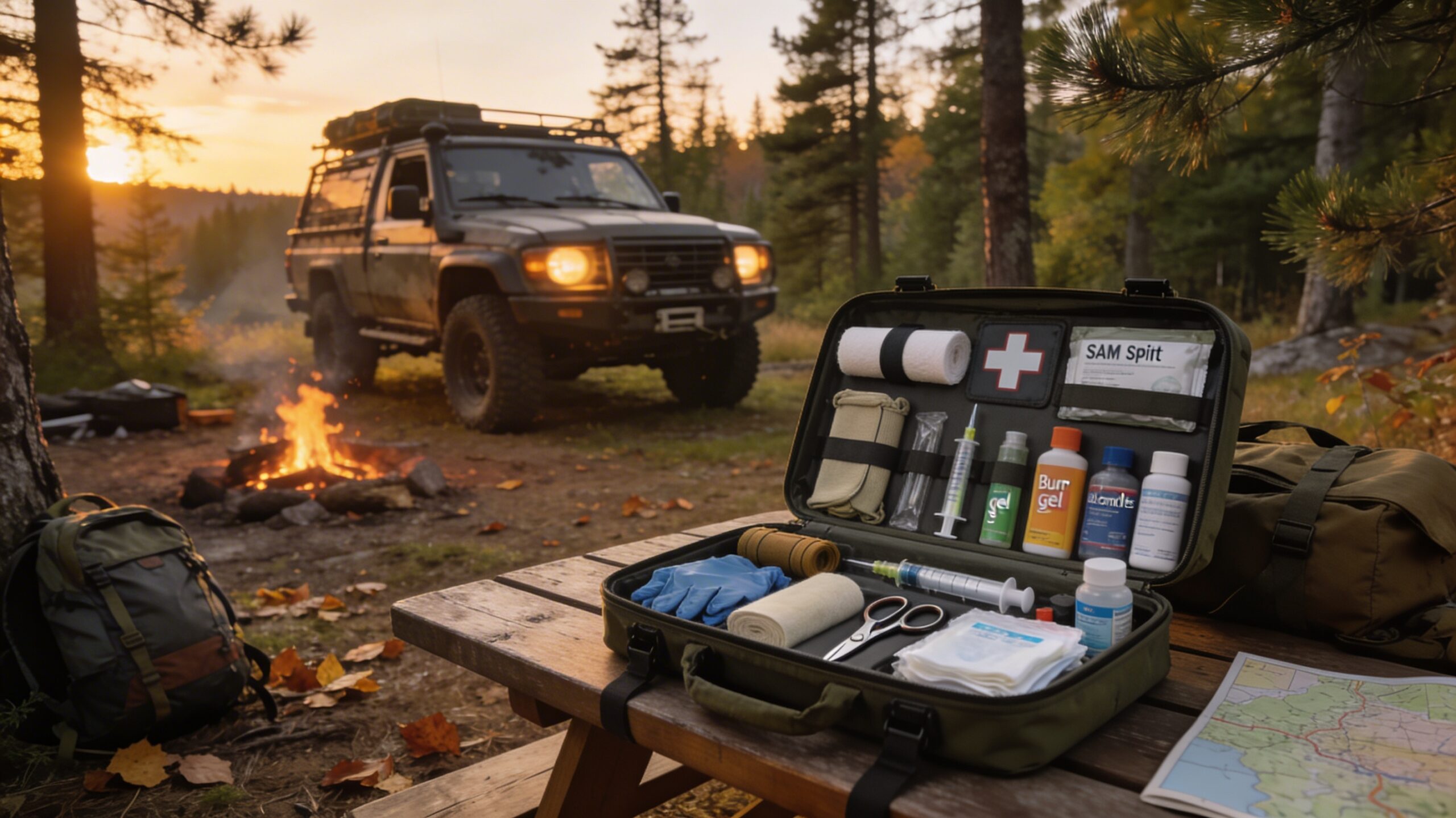
You can buy a pre-made first aid kit or build your own. The key is understanding what’s inside and how to use every item. Many overlanders keep multiple kits — one in the rig, one in a backpack, and one at home.
Michigan Overland recommends reviewing your kit seasonally and tailoring it to your trips. For example:
- Add a SAM splint and irrigation syringe for longer expeditions.
- Pack electrolytes and heat packets for seasonal extremes.
- Keep gloves, trauma shears, and tourniquets accessible, not buried in the bottom.
Check out our companion guide on Building Your Overland Medical Kit.
Core First Aid Skills to Know
- Wound & Bleeding Control: Learn to stop bleeding quickly and safely.
- Burn Treatment: Campfires and stoves are top hazards; know how to treat first- to third-degree burns.
- Sprains, Strains & Fractures: Stabilize the injury and prevent further movement.
- Dehydration & Heat Exhaustion: Recognize early signs and rehydrate before it escalates.
- Hypothermia & Frostbite: Common in Michigan’s shoulder seasons — prevention is key.
- Bites & Stings: Reduce allergic reactions and identify when to seek medical help.
- CPR: You hope you’ll never need it, but regular refreshers are vital.
For minor issues like ticks or splinters, proper removal prevents infection and long-term complications.
Don’t Skip the Advanced Stuff
If you often lead group trips, someone in your convoy should invest in advanced wilderness medical training. Courses cover wound packing, fracture management, and even basic suturing techniques — all incredibly valuable when help is hours away.
Final Thoughts
First aid training isn’t just another overlanding accessory — it’s an essential part of being self-reliant. As much as we gear up for recovery and mechanical repairs, our medical readiness deserves the same attention.