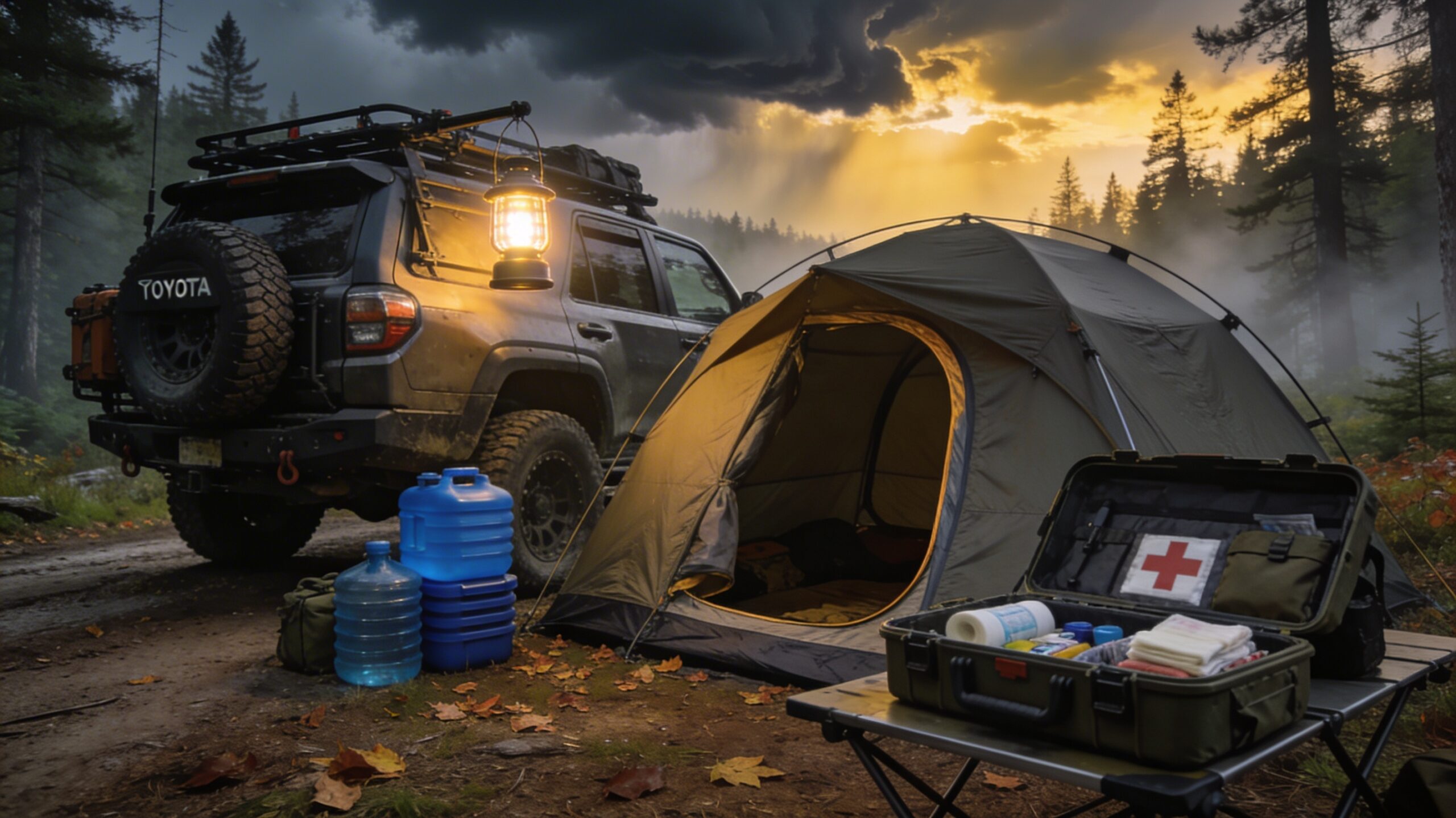
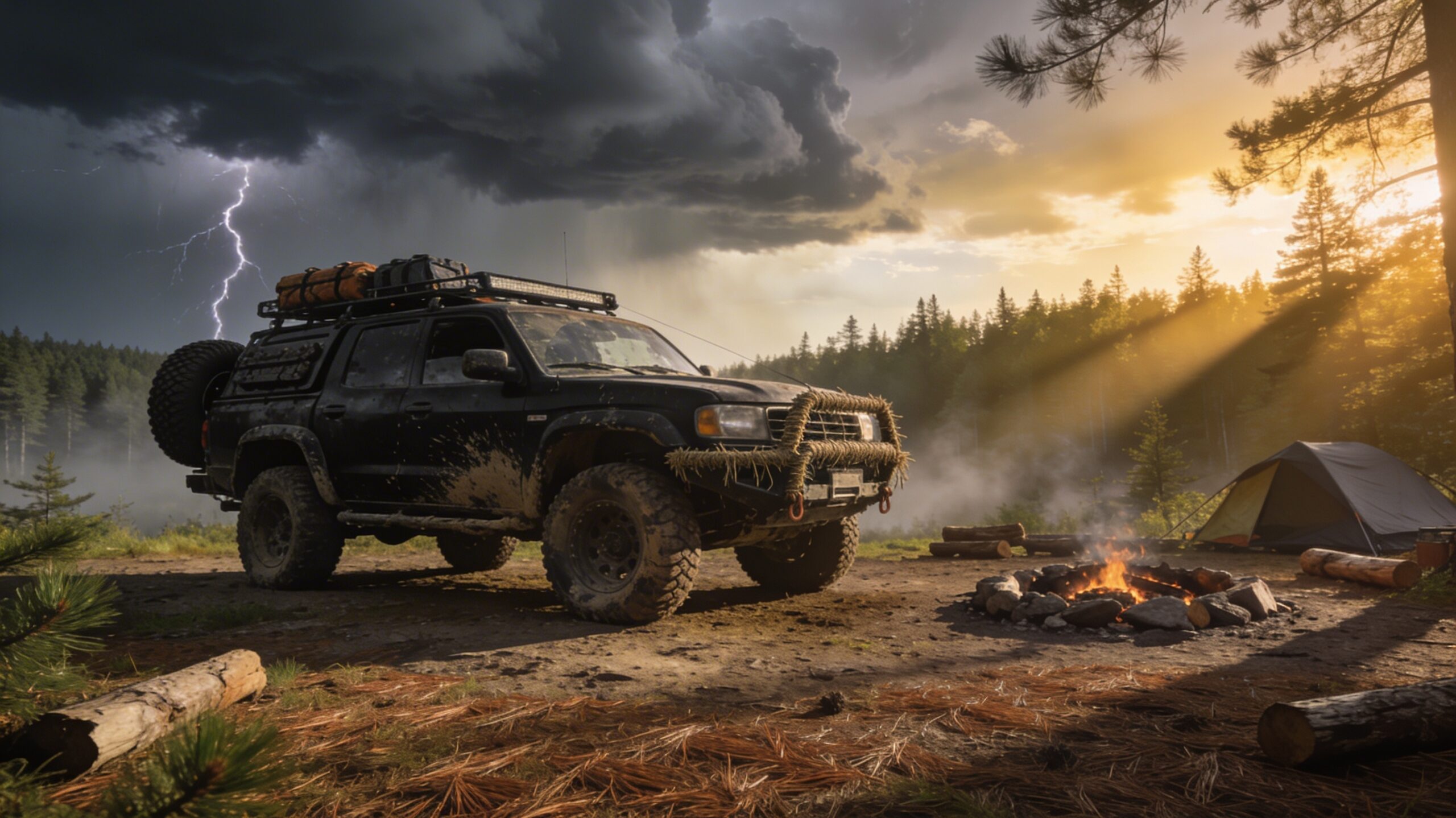
Vehicle Everyday Carry (VEDC) builds on personal everyday carry by adding tools, supplies, and safety gear that live in the vehicle full-time. While on-body EDC covers what is immediately accessible, VEDC prepares the driver and passengers for situations that go beyond what pockets can handle—breakdowns, minor medical issues, weather changes, and short-term disruptions to normal travel.
Within the preparedness triangle, VEDC sits below personal EDC, offering more capability, storage, and redundancy. It bridges the gap between everyday items and larger systems like Get Home Bags (GHB), Bail Out Bags (BOB), and full camping or overlanding loadouts.
VEDC and the Preparedness Triangle
Personal EDC focuses on what stays on the person; VEDC focuses on what stays in the vehicle. Both layers work together. A well-thought-out VEDC:
- Supplements the items carried on the body.
- Supports short-term emergencies and inconveniences.
- Provides a platform for longer trips without needing to re-pack from scratch every time.
Many overlanders store part of their camping and travel gear in the vehicle already, often in a drawer system or bins. This approach makes it easier to leave town for a quick weekend without starting from zero each time. VEDC builds on that idea with a consistent, everyday-ready core set of gear.
To see how VEDC fits with other layers, readers can reference the Everyday Carry article and the Get Home/Bail Out Bag overview in the same preparedness triangle series.
Start With an Assessment
Before loading the vehicle with gear, it helps to assess actual needs and constraints. A simple assessment can include:
- Type of vehicle: Cargo space, interior layout, and off-road capability will influence what fits and how it’s stored.
- Yearly weather conditions: In places with harsh winters or hot summers, seasonal considerations may require dedicated cold-weather or heat mitigation kits.
- Commute distance: Short urban commutes differ from long rural drives; each presents different risks and needs.
- Remoteness of home or job location: Remote areas with limited services call for more self-reliance than dense urban environments.
- Priority in an emergency: For some, the top priority is getting children from school and returning home; for others, it may be reaching a work site, family member, or designated safe location.
This assessment helps define what “must live in the vehicle” versus what can remain trip-specific.
Example VEDC Contents
A practical Vehicle Everyday Carry setup focuses on items that stay in the vehicle at all times and are useful for both everyday driving and overlanding. These items do not usually come out unless they are being used, maintained, or restocked. A representative VEDC list might include:
- Get Home or Bail Out Bag – A dedicated bag that can be grabbed quickly if travel on foot becomes necessary, as outlined in the Get Home/BOB article.
- Sick kit – Basic comfort and care items for illness while traveling (medications, tissues, bags, wipes).
- Water – Bottled or stored water for drinking and basic hygiene.
- Snacks and gum – Shelf-stable options for energy and comfort during delays.
- Jumper cables – For dead batteries, either personal or helping others.
- Tow strap – Light recovery capability for stuck vehicles in mild conditions.
- Emergency tool – A seat belt cutter and window breaker within reach of the driver.
- First aid kit – More comprehensive than the on-body kit, scaled for multiple people.
- Maps (local/state/national) – Paper maps as backups for navigation if electronics fail.
- Cell charging cord – Dedicated cord(s) kept in the vehicle.
- Knife – Utility blade for general tasks.
- Flashlight – A bright, durable light stored where it can be reached quickly.
- OBD2 dongle or code reader – Useful for diagnosing check-engine lights and minor issues.
- Fire extinguisher – Mounted securely, rated for automotive and small fires.
- Flares or reflective triangles – For signaling and roadside visibility.
- Cold-weather kit (seasonal) – Items such as blankets, gloves, hat, hand warmers, and an ice scraper in winter climates.
Many survival-type items—shelter components, extra clothing, cooking gear—may already be packed with camping gear or inside a Get Home Bag or Bail Out Bag. VEDC focuses on vehicle-specific items and gear that remains with the vehicle in town and on the trail.
Relationship to GHB, BOB, and Trip Loadouts
Vehicle Everyday Carry does not replace a Get Home Bag or Bail Out Bag; instead, it supports and supplements them. When a GHB or BOB is stored in the vehicle, those bags add another layer of capability, especially if travel on foot becomes necessary.
Likewise, recovery kits, tool kits, and full camping or overlanding setups are often part of a standard trip loadout. These may not be carried every day in town but are essential for dedicated trail or camping weekends. VEDC should be built so that it stands alone for daily driving while also integrating smoothly with these larger systems when they are added.
Storage, Organization, and Accessibility
How VEDC is stored is as important as what is carried. Drawer systems, cargo boxes, and organizers keep gear from rolling around and make it easier to locate items quickly. A well-designed drawer can:
- Keep core camping and overlanding gear ready for spontaneous trips.
- Reserve one side or section for VEDC items that never leave the vehicle.
- Secure gear out of sight and reduce visual clutter.
However, enclosed storage has trade-offs. In some situations—such as a rear-end collision or rollover—drawers or hatch areas may become difficult or impossible to access. This makes it important to think about:
- Keeping critical items (emergency tool, small first-aid kit, flashlight) within arm’s reach of the driver.
- Storing at least some gear where it can be reached from the front seats.
- Planning for how to access essential gear if the tailgate or drawer becomes jammed.
Each driver should weigh the benefits of secure storage against potential accessibility issues and choose a layout that best supports their needs and typical use.
VEDC as an Everyday Safety Net
Vehicle Everyday Carry is best viewed as an everyday safety net that quietly supports both routine driving and overland travel. It adds meaningful capability beyond what is carried on the body, without requiring a full expedition loadout for every trip across town.
When integrated thoughtfully into the preparedness triangle—alongside personal EDC, Get Home and Bail Out Bags, and home or shelter-in-place planning—VEDC helps overlanders move through both Michigan’s roadways and backroads with greater confidence and resilience, whether the journey is a daily commute or a weekend escape.