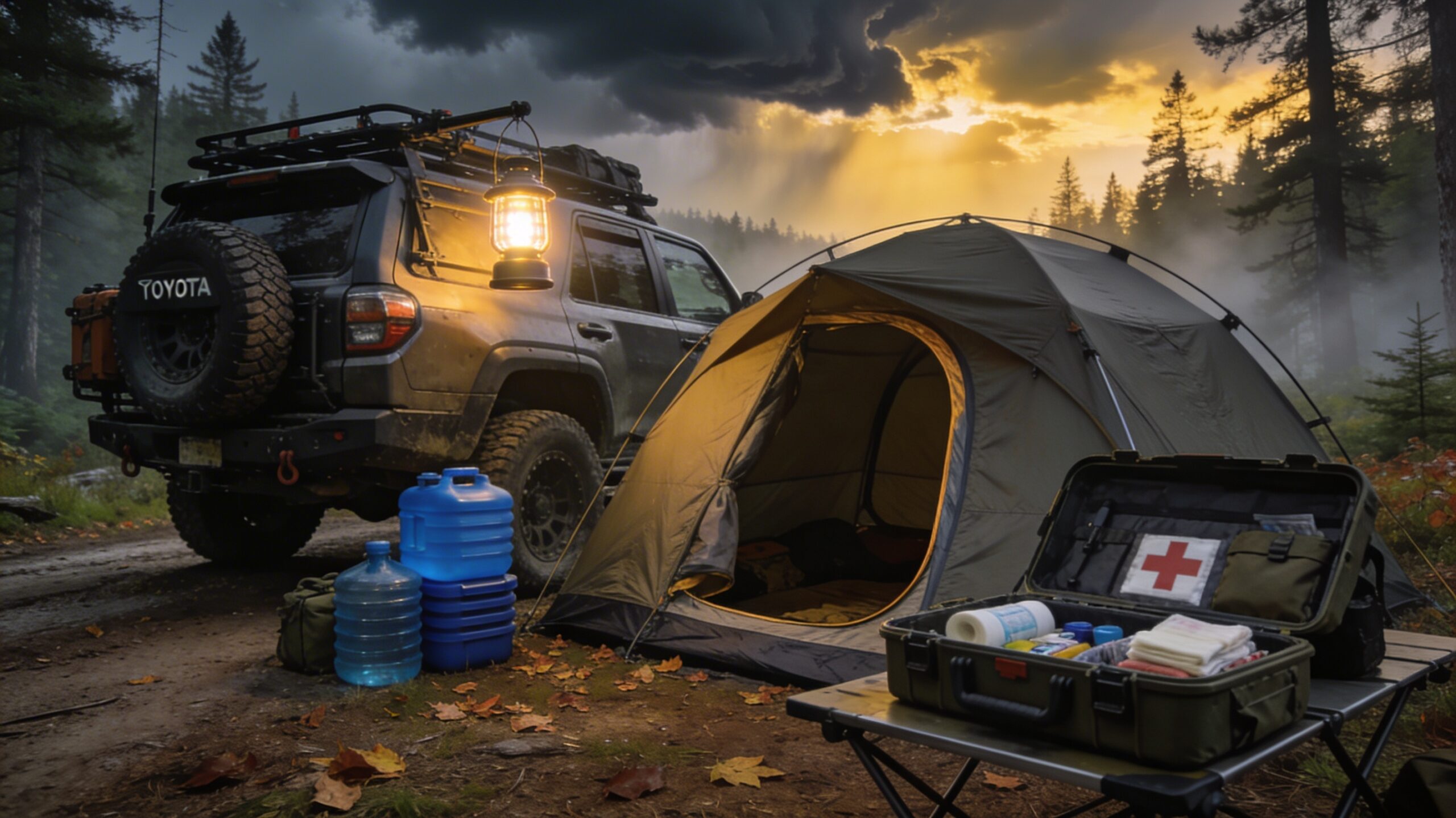
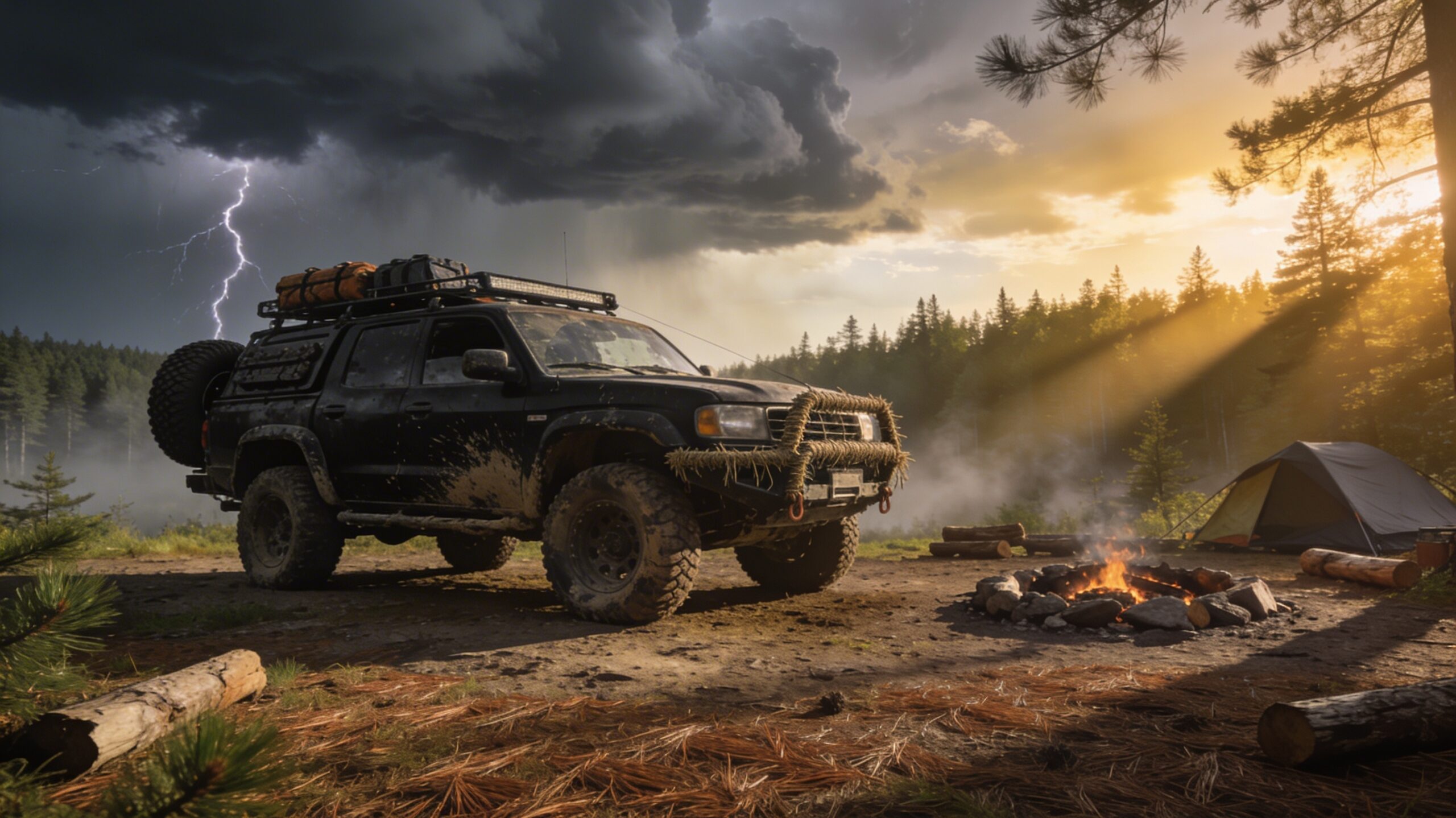
Minimalism in overlanding is not about suffering without gear; it is about carrying only what truly adds value on the trail. A minimalist kit is easier to pack, faster to deploy at camp, and far less stressful to live with over a long weekend.
New overlanders often fill their vehicles with bins of “just in case” gear, only to spend more time digging through tubs than enjoying camp. Over time, intentional packing and a minimalist mindset lead to a setup that is ready for a spontaneous Friday-afternoon departure with very little prep. For a deeper foundation on this mindset, see Michigan Overland’s guide to an adventure-ready premade go box.
Lessons Learned from Overpacking
Early trips frequently reveal how inefficient a “bring it all” approach can be. Three large tubs of camping gear in the back of a rig might feel prepared, but on the trail they rattle incessantly over rough roads, bury the important items at the bottom of bins, and take up valuable space that could be used for passengers, water, or fuel.
Those same tubs might be necessary for a full family of five but are excessive for a solo or one-child weekend. The turning point often comes after a trip where half the gear never gets used. At that stage, it becomes clear which items are essential and which are simply along for the ride.
This realization naturally leads into building a smaller, more focused kit—such as an “adventure-ready” box kept in the vehicle—so that the core essentials are always packed and ready.
Lightweight vs. Minimalist: Two Different Mindsets
Minimalist overlanding is often confused with going ultralight, but they are separate ideas. Both matter, especially on Michigan’s rough forest roads and sandy two-tracks, where weight and space can impact capability.
Lightweight Gear
Lightweight gear focuses primarily on reducing weight. This is critical for backpackers and bikepackers who carry everything on their backs or bikes, as well as motorcycle travelers with very limited carrying capacity.
For vehicle-based overlanders, weight still matters (suspension performance, payload limits, and fuel economy), but it is usually not as restrictive as for backpacking.
Minimalist Gear
Minimalism focuses on fewer, more purposeful items rather than purely lighter items. A minimalist setup asks: Does this item get used on most trips? Does it serve more than one purpose? Would the trip significantly suffer without it?
Sometimes the minimalist choice is actually heavier. For example, a compact backpacking stove is light and efficient, but a two-burner camp stove might be more functional and enjoyable for regular overlanding use. A minimalist kit chooses the stove that will truly be used, then eliminates redundant backups.
A practical balance for overlanders is minimalism first (only the essentials), followed by lightweight options (bias toward lighter, more compact versions of those essentials where it makes sense).
Building a Minimalist Overland System
A strong minimalist system starts with an honest assessment of what actually gets used on weekend trips. From there, build a core kit that can support both solo and family outings with minimal changes.
Core Gear Categories
A practical always-packed list might look like this:
- Camp kitchen:
- Primary cook stove and fuel
- Nesting cook set (pots, pan, lid)
- Compact kitchen kit (knife, cutting board, utensils, sponge, towel, seasonings)
- Camp life:
- Folding table (or integrated slide-out surface in future drawer system)
- Chair(s)
- Lighting (headlamps, lantern, string lights if desired)
- Safety and essentials:
- Recovery gear sized for the vehicle
- Basic tool kit
- First-aid/medical kit
- Fire-starting kit (redundant methods)
- Sleep system:
- Hammock and tarp, or compact tent
- Sleep insulation (quilt or bag, pad or underquilt)
- Personal and trip-specific:
- Clothing packed in a duffel
- Camera gear in a smaller, intentional kit
These items can live full-time in a single “adventure box,” a cooler repurposed as dry storage, or a modular drawer system. The key is that the bulk of the kit remains unchanged trip to trip, with only food and clothing rotating.
Planning a Modular Cargo System
A modular drawer or cube system in the rear of the rig takes minimalism a step further by standardizing where everything lives. A cube-based design can lay flat when the third row is removed or folded, offering top access to front cubes and drawer access to rear cubes, or stack when the rear seat is up, maintaining access to all drawers while still allowing passengers.
When designing drawers, decide which items should always be stored in the vehicle—things like the stove, kitchen kit, lighting, recovery gear, and tools—so packing becomes a matter of adding trip-specific items like perishables, fresh water, and personal bags.
Approaches to Packing with a Minimalist Mindset
There is no single “correct” minimalist kit. However, several guiding strategies can help overlanders pack less while still feeling fully prepared for weekends in places like Manistee, Grayling, or Kalkaska.
1. Consolidation Is Key
The camp kitchen is often the best place to start consolidating. Instead of individual pots, pans, utensils, and random tools, consider a compact, all-in-one kitchen kit such as the GSI Destination Kitchen Set, which consolidates a knife, cutting board, utensils, spices, and cleaning tools into a single organized pouch, or a nesting cook set that combines multiple pots and a pan into a single, tightly packed unit.
This consolidation shrinks the camp kitchen down to one or two compact packages that are easy to grab and pack into a dedicated drawer or cooler.
2. Take the Lightweight Route Where It Counts
Minimalist overlanding does not always require ultralight gear, but lighter, more compact options can make a big difference in some categories: Use a smaller, packable camp table instead of a heavy, full-size unit for solo or two-person trips; pack clothing into a soft duffel instead of a large hard case to save space and make loading easier; invest in performance apparel that can be worn multiple days, reducing the total number of shirts, socks, and underwear needed.
These changes reduce both bulk and decision fatigue at home, making trip preparation faster and more consistent.
3. Borrow from Ultralight Philosophy
Cyclists and motorcyclists who travel long distances with minimal storage prove how little gear is truly required. Their kits often fit into a single pannier or duffel, yet still cover sleeping, cooking, and clothing needs.
A useful exercise for overlanders is the “three-day single-bag challenge”: Pack everything needed for a three-day weekend—clothes, cook system, food, and sleep system—into one bag, plus water and fixed vehicle gear, then run a weekend trip using only what is in that bag and the fixed essentials already in the rig.
This challenge exposes unnecessary gear and highlights multi-use items that could form the backbone of a long-term minimalist system.
4. Simply Don’t Pack It
Sometimes the best minimalist move is to leave gear at home. A simple rule helps: If an item has not been used in several trips, remove it from the kit. If it becomes necessary later, look for a way to replace it with something already in the system, or add it back only if it will see regular use.
Camera gear is a common culprit. Consciously downsizing to a single body and one or two lenses in a compact sling or small camera bag keeps photography enjoyable without overwhelming the rest of the kit.
Applying Minimalism to Real-World Trips
In practice, a minimalist loadout for Michigan overlanding might look like this for a weekend:
| Category | Minimalist Example Loadout |
|---|---|
| Cooking | Two-burner or compact stove, one nesting pot/pan set, small kitchen kit, single fuel type |
| Food | One cooler for perishable items, compact bin or bag for dry goods and snacks |
| Sleep | Hammock + tarp or single compact tent, appropriate bag/quilt and pad |
| Camp Life | One table, one chair per person, single lantern plus headlamps |
| Safety & Tools | Recovery gear, tool roll, med kit, fire-start kit, basic spares |
| Personal | One soft duffel per person, small camera kit, toiletries |
This type of kit can be scaled up for a family or down for solo travel without adding complexity. The future drawer system or cube layout in the rig becomes a physical expression of those minimalist choices—each drawer or cube represents a category with a clear purpose.
Next Steps for Michigan Overlanders
Overlanders across Michigan can start transitioning toward minimalism on their very next trip by evaluating which items were not used last time and pulling them from the kit, consolidating kitchen gear into one nesting cook set and one compact utensil kit, planning or sketching a modular drawer or cube system tailored to their rig and family size, and attempting a “one-bag weekend” challenge to push their comfort zone and identify true essentials.
Future additions such as onboard water storage, an integrated slide-out kitchen, or dedicated drawer systems can all be designed with minimalism at the core. Each upgrade should support the goal of spending less time digging through tubs and more time enjoying campfires, lakeshores, and forest roads across Michigan.