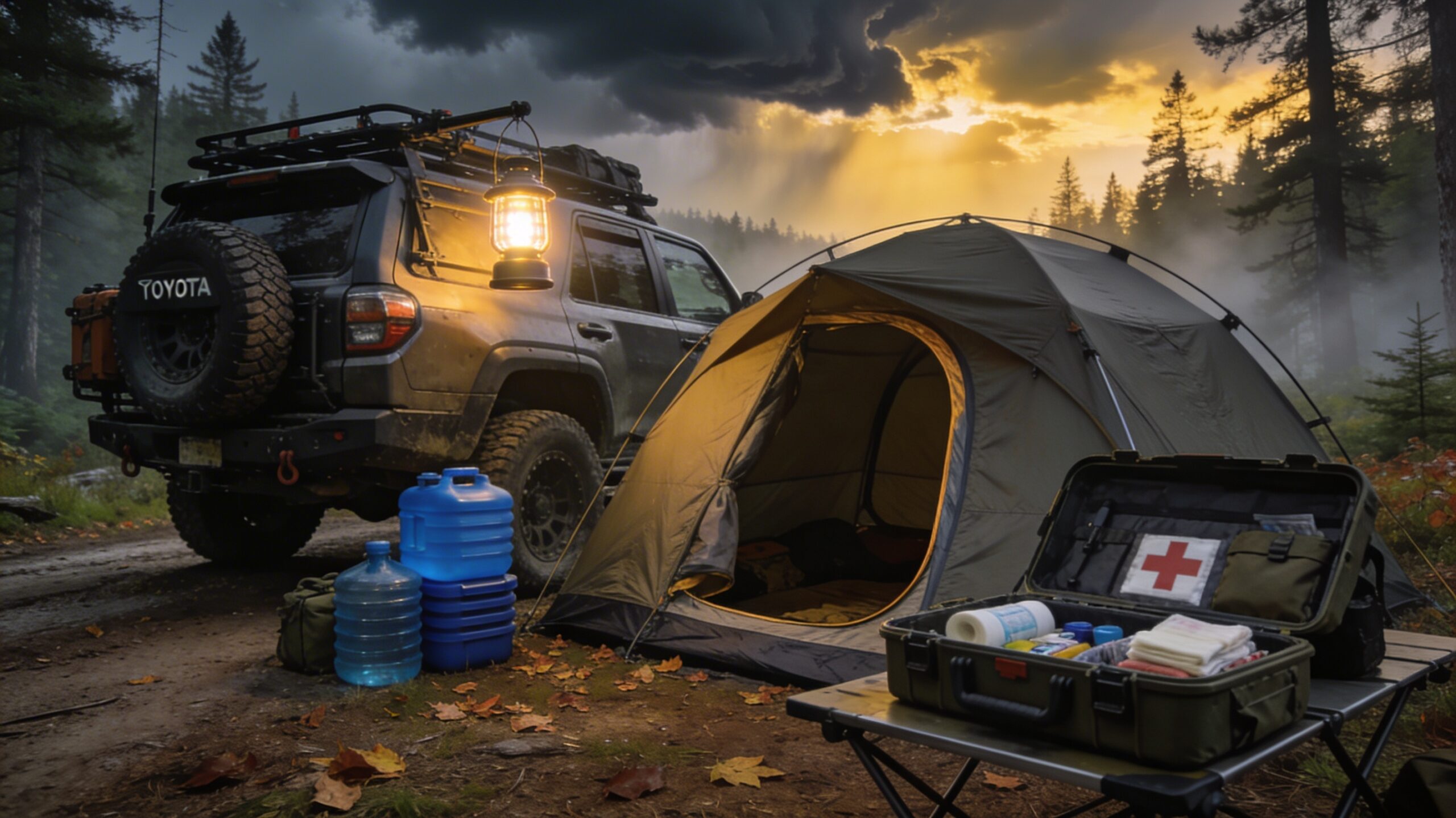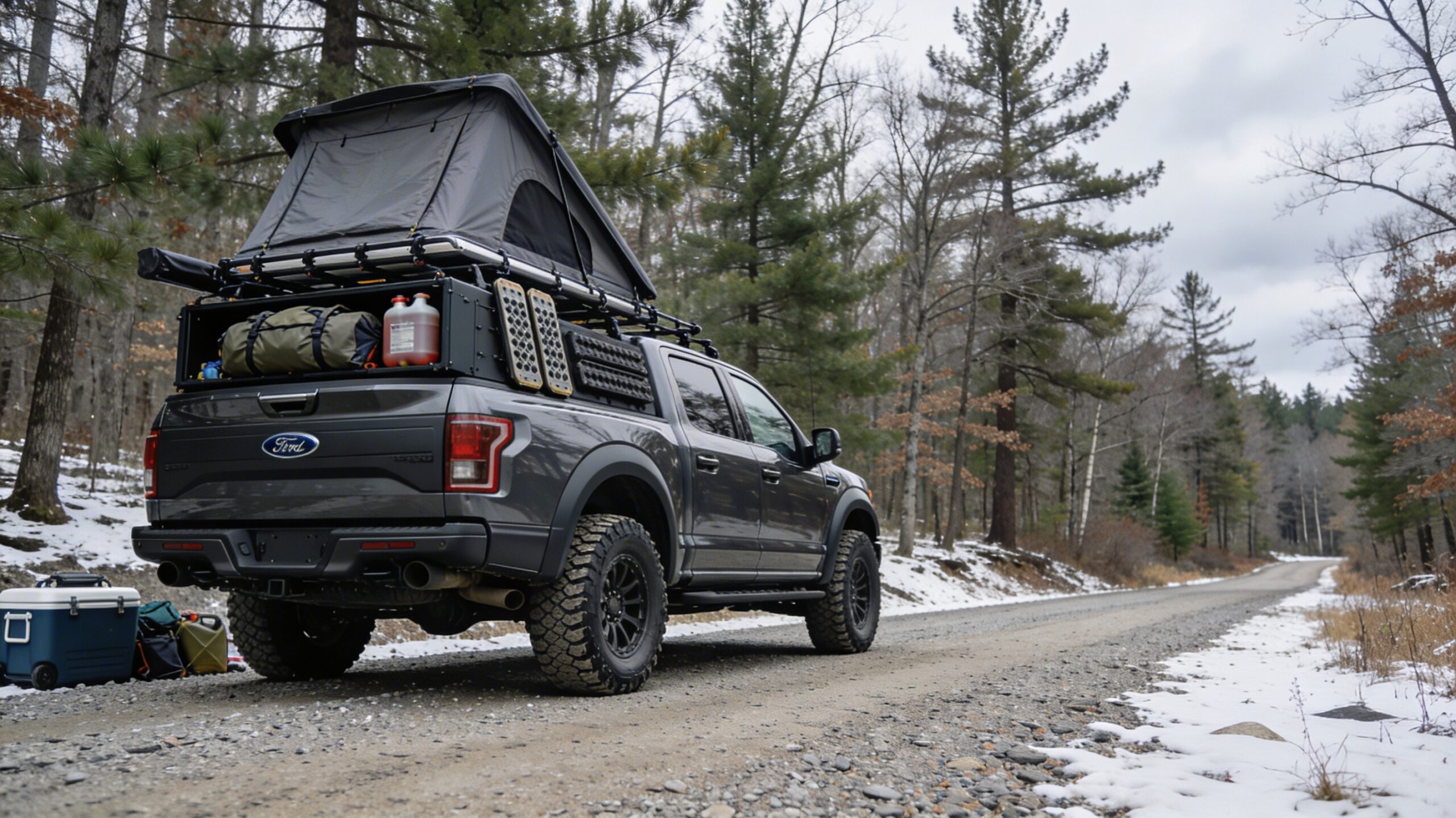
Most of us built our rigs for weekends in the woods, not worst-case scenarios. The good news is you don’t need two separate vehicles for those roles. With a focus on reliability, fuel range, and a few smart packing habits, your everyday overland setup can also serve as a capable bug-out rig when life goes sideways.
What Is an Overland Rig?
An overland rig is any vehicle set up for self-reliant, vehicle-based adventure travel where the journey is as important as the destination. That might be a lifted 4×4 with a rooftop tent, or it might be your mostly stock SUV, wagon, or truck loaded with camping gear, maps, and a way to sleep inside or beside the vehicle.
At its core, an overland rig needs to support multi-day travel, carry what you need to live out of the vehicle, and handle a mix of pavement, gravel, and the occasional rough two-track on your chosen route. For most Michigan trips, that means highway miles to the trailhead, forest roads in places like Huron-Manistee, and maybe a sandy seasonal road—not rock crawling in Moab.
What Is a Bug-Out Rig?
A bug-out rig (or bug-out vehicle) is built or equipped to move you quickly and safely when things go sideways—wildfire, lake-effect blizzard, extended power outage, or civil unrest. Its job is simple: get you, your people, and your critical gear away from danger and to a safer location, with enough supplies to be self-sufficient for at least a few days.
That bug-out rig can be a truck, wagon, minivan, or even a commuter car; reliability, range, and cargo space matter more than aggressive looks or hardcore off-road parts. As long as it starts every time, carries your essentials, and can comfortably cover distance, it has the bones of a capable emergency vehicle.
Overland Rig vs. Bug-Out Rig
Both platforms move people and gear, but their missions diverge: one is adventure by choice, the other is movement under pressure. An overland rig emphasizes comfort and livability over distance—sleep systems, camp kitchen, navigation, and maybe a bit of luxury around camp.
A bug-out rig prioritizes speed, simplicity, and survival-focused gear: water, food, first aid, communications, critical documents, and weather-appropriate clothing. Neither one has to be a hardcore off-road build; most overland routes stick to pavement and mild dirt, and most realistic bug-out scenarios use primary and secondary roads, with off-road capability only mattering if you truly need to bypass congestion or reach a remote safe spot.
For both use cases, a reliable, mostly stock vehicle on quality all-terrain or highway tires will usually serve you better than an overbuilt, temperamental project truck. The more complex the build, the more there is to break when you’re far from help or under stress.
Why Fuel Range Matters More Than Obstacles
For overlanding and bugging out alike, fuel range is often more important than being able to drive over every obstacle in your path. If you can’t reliably make it from one fuel source to the next, all the armor, lockers, and lift kits in the world won’t save your trip or evacuation.
Start by knowing your real-world mileage when loaded, at Michigan highway speeds and slower backroad cruising. From there, calculate practical range with a conservative reserve and plan your route around fuel stops you can realistically access—especially in rural areas or during storms, when supply can be interrupted.
Bug-out planning adds a few extra layers: decide whether you’re intentionally avoiding major population centers, which may mean bypassing the biggest, most obvious fuel stations. Identify alternates on secondary routes in case your first choice is closed, empty, or unsafe, and then decide whether extra fuel cans add necessary margin or just extra weight and risk in your specific scenario.
Planning the Route, Not Just the Rig
Whether you’re heading north for a week-long overland loop or south to get ahead of a storm, your route dictates what your rig actually needs. Begin by mapping fuel stops, water resupply options, overnight locations, and realistic turnarounds, then look closely at what kind of roads connect those dots.
If your route stays on pavement and graded dirt, extreme off-road capability is wasted effort and budget. If the only way into your preferred bug-out location is a washed-out two-track or deep sand, then ground clearance, traction, and recovery gear become non-negotiable.
For overland trips, amenities like campgrounds, state forest camp areas, and small towns for groceries and water can lighten the load you need to carry. In a bug-out scenario, you may not be able to count on open stores, working ATMs, or plowed roads, so your vehicle and kit need to cover the essentials for the whole distance without resupply.
One Rig, Two Roles
In practice, an overland rig can be a bug-out rig, and a bug-out rig can be an overland rig, especially when you resist the urge to overbuild. Reliability is the foundation: a well-maintained, mostly stock vehicle usually beats a heavily modified one when you’re far from help or navigating tense evacuation routes.
Most of the gear you need for both roles is probably already in or near your vehicle—basic tools, jack, jumper cables, first-aid kit, warm layers, and a few gallons of water. The simplest way to bridge the gap is with a dedicated grab-and-go bin or duffel that lives in your garage or cargo area, always ready to toss into the rig.
Load that bin with bug-out-specific items like copies of important documents, extra medications, compact shelf-stable food, a small stove, water treatment, headlamps, batteries, and compact shelter or blankets. On weekend trail runs, that bin adds resilience to your overland setup; when it is time to actually leave in a hurry, it turns your familiar trip rig into a serious emergency vehicle without last-minute scrambling.
You Don’t Need an Expensive Build to Bug Out
The overland world is saturated with high-dollar builds and extreme gear, but emergency readiness doesn’t require any of that. Many of the most practical bug-out vehicles are bone-stock sedans, minivans, and crossovers that start every time and sip fuel on the highway.
A simple, stock truck or SUV with up-to-date maintenance, sensible tires, and a thought-out load of essential gear will serve you better in a crisis than a showpiece that’s always waiting on parts. For Michigan Overland readers, that means your daily-driver F-150, Outback, or old 4Runner can absolutely be both your overland rig and your bug-out rig if you focus on fuel range, route planning, and a well-packed grab-and-go bin.