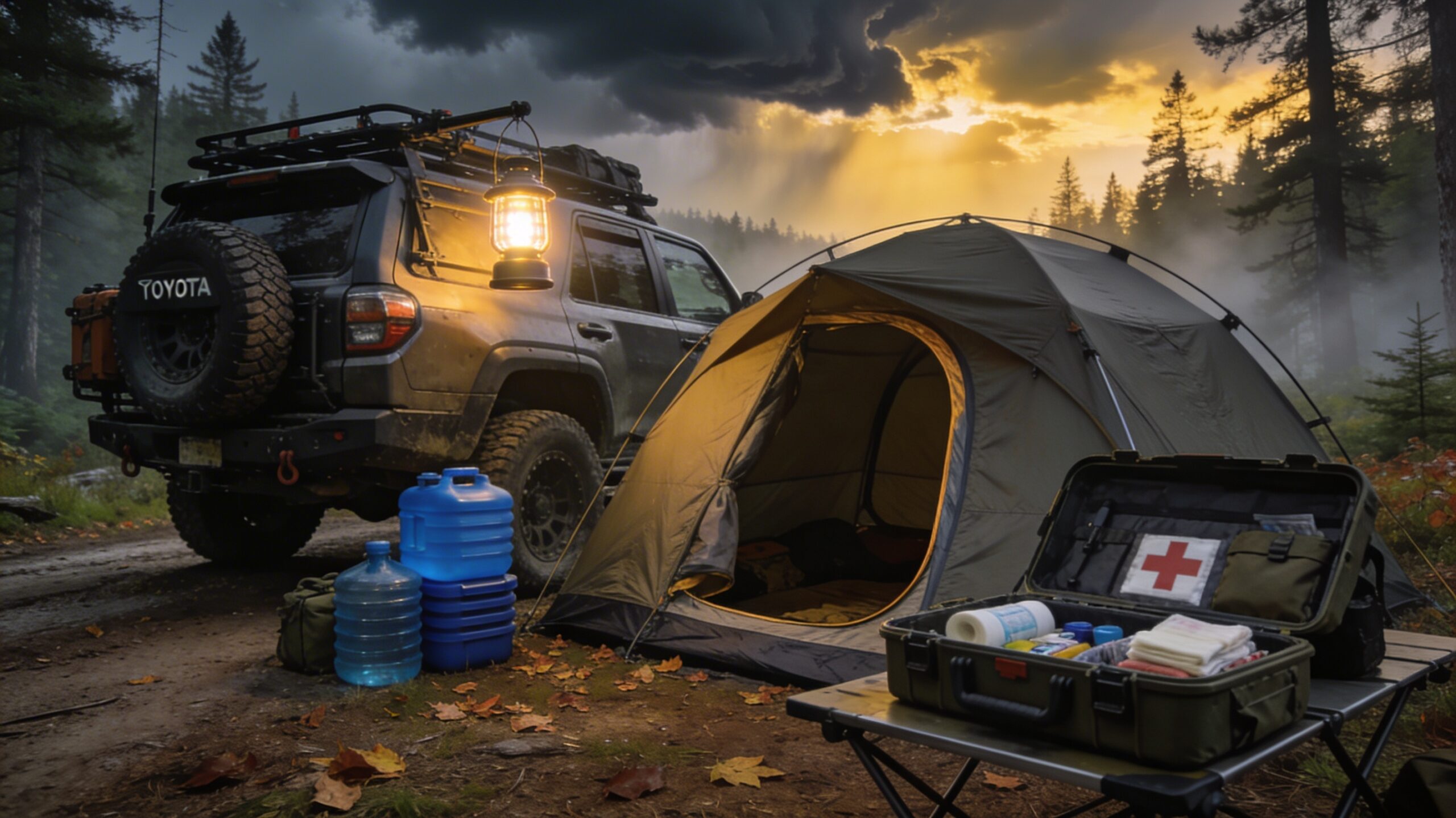
The lowest, broadest layer of the preparedness triangle focuses on long‑term survival and stability. Unlike EDC, vehicle kits, or get‑home bags, this layer assumes significant disruption: either staying at home for an extended period or leaving home entirely for a safer location. These two paths are known as Shelter in Place (SIP) and Not Coming Home (NCH).
Because no two households or locations are the same, this layer is inherently subjective. It depends on family size, geography, available resources, and the types of emergencies that are most likely—such as severe weather, infrastructure failures, or broader regional events. The goal is to think through both options in advance and build a plan that aligns with real‑world risks and capabilities.
Shelter in Place vs Not Coming Home
Shelter in Place (SIP) means remaining at home until conditions improve and it is safe to resume normal movement. This might be the best option in many scenarios, particularly when home is structurally sound, relatively safe, and stocked with essentials. A practical starting point is to aim for at least a month of food, water, and critical supplies for everyone in the household, with the intent to expand that as resources and space allow.
Not Coming Home (NCH) assumes that staying at home is no longer viable. Evacuation may be forced (e.g., due to fire, flooding, or mandatory orders) or chosen because home can no longer support basic needs safely. This is a last‑resort scenario; when possible, staying put is often simpler and safer. NCH planning focuses on leaving quickly, traveling safely to a predetermined safe location, and having enough supplies to remain self‑sufficient there for an extended period.
Both approaches should be considered part of the same continuum rather than separate plans. In many situations, the preferred sequence is to shelter in place first, then evacuate only if conditions require it.
Conducting a Home‑Level Assessment
Planning for SIP and NCH requires a more detailed assessment than planning for Vehicle Everyday Carry or Get Home/Bail Out Bags. Key questions include:
- Location risks: What events are realistic for the home area—severe storms, flooding, extended power outages, industrial accidents, civil unrest, wildfires, or winter emergencies?
- Household size and needs: How many people (and animals) need to be supported, and what special medical, dietary, or mobility needs exist?
- Infrastructure dependencies: How reliant is the home on grid power, municipal water, natural gas, or internet connectivity?
- Evacuation routes and destinations: Where would everyone go if home is not an option, and how far is that location? Is it urban, suburban, or rural?
- Vehicle capacity: Is there a vehicle (or vehicles) large enough to transport people, pets, and critical supplies out of the affected area?
There is no one‑size‑fits‑all answer. An urban apartment, a suburban neighborhood, and a rural homestead will each face different constraints and opportunities.
Example Approach: Shelter First, Then Move
A common strategy is to plan to shelter in place initially, then evacuate to a secondary location if conditions deteriorate. For some, that secondary location might be a family property in a less densely populated area—far enough from major population centers to feel safer, but still close enough to have access to services, roads, and community if needed.
In this model, home remains the primary base as long as possible. Evacuation is reserved for situations where home becomes unsafe or unsustainable. This reduces unnecessary movement and makes planning more efficient.
Building a Shelter in Place (SIP) Plan
A robust SIP plan focuses on staying in the home for at least several weeks with minimal outside support. Key considerations include:
- Food: Canned goods, dry staples (rice, beans, pasta, oats), and other non‑perishable items that are easy to prepare. Dehydrated foods and freeze‑dried meals can supplement long‑term storage and provide portable options if evacuation becomes necessary.
- Water: Stored water and/or the ability to filter and purify water from safe sources. A general planning guideline is at least one gallon of water per person per day for drinking and basic hygiene, scaled for the number of people and pets.
- Cooking: Alternative ways to cook if power or gas service is disrupted—such as camp stoves, grills, or other off‑grid options—while observing safety and ventilation.
- Power and light: Flashlights, lanterns, batteries, and small power banks to keep critical devices running.
- Sanitation and hygiene: Toiletries, cleaning supplies, trash bags, and ways to manage waste if normal services are interrupted.
- Health and comfort: Medications, first‑aid supplies, basic over‑the‑counter remedies, and comfort items to help manage stress.
Many of these items can be stored in dedicated bins or shelves so they remain organized and easy to inventory. Some households also pre‑stage partially packed bags with clothing and pet supplies, so that SIP provisions can quickly transition into NCH gear if leaving becomes necessary.
Planning for Not Coming Home (NCH)
Not Coming Home planning assumes the need to leave quickly and stay away from home for an extended period. This layer blends home preparedness with mobility and overlanding experience. An NCH plan typically includes:
- Pre‑packed bins: Labeled containers with at least a month of food, water support (containers, filters, purification tablets), and essential gear that can be quickly loaded into the vehicle.
- Clothing and personal bags: Pre‑planned bags for each family member, including clothing, basic hygiene items, and weather‑appropriate gear.
- Animal provisions: Food, water containers, leashes, carriers, and any medications for pets.
- Vehicle loading plan: A clear sequence for loading gear into the vehicle so that critical items are not forgotten and remain accessible.
- Destination strategy: One or more designated locations—such as family homes, cabins, or trusted friends—along with backup options if the primary destination is not available.
In practice, this means that when an evacuation seems likely, bins and bags are staged near the vehicle in advance. If evacuation becomes necessary, the household can load up and move quickly rather than trying to assemble supplies at the last minute.
Building a Family‑Focused Plan
A solid SIP/NCH plan is more than just gear; it also includes procedures and communication. Helpful components include:
- Rally points: Agreed‑upon locations where family members will meet if separated, both near home and along likely evacuation routes.
- Communication rules: Who contacts whom, in what order, and using what methods (cell, radio, messaging apps) if networks are overloaded or down.
- Separation procedures: Clear expectations for what to do if someone cannot reach home—such as when to proceed to a rally point or secondary location.
- Multiple routes: At least two or three viable routes out of the area that avoid known choke points and high‑risk zones when possible.
- Caches (optional): For longer drives or remote routes, some people choose to pre‑position small caches of supplies along the way, on private property or with trusted contacts, to provide backup food, water, or fuel.
Documenting this plan—on paper as well as digitally—and reviewing it with all household members ensures that everyone understands their role, even under stress.
Integrating SIP and NCH into the Preparedness Triangle
Shelter in Place and Not Coming Home form the foundation that supports all other preparedness efforts. Everyday Carry, Vehicle Everyday Carry, and Get Home/Bail Out Bags handle the immediate, mobile side of emergencies. SIP and NCH address what happens when an event stretches from hours into days or weeks.
By treating this bottom layer as a deliberate, family‑centric plan—rather than an abstract idea—overlanders can ensure that their skills and gear are anchored to a clear strategy: stay safely at home as long as possible, and leave efficiently and purposefully only when it becomes necessary.