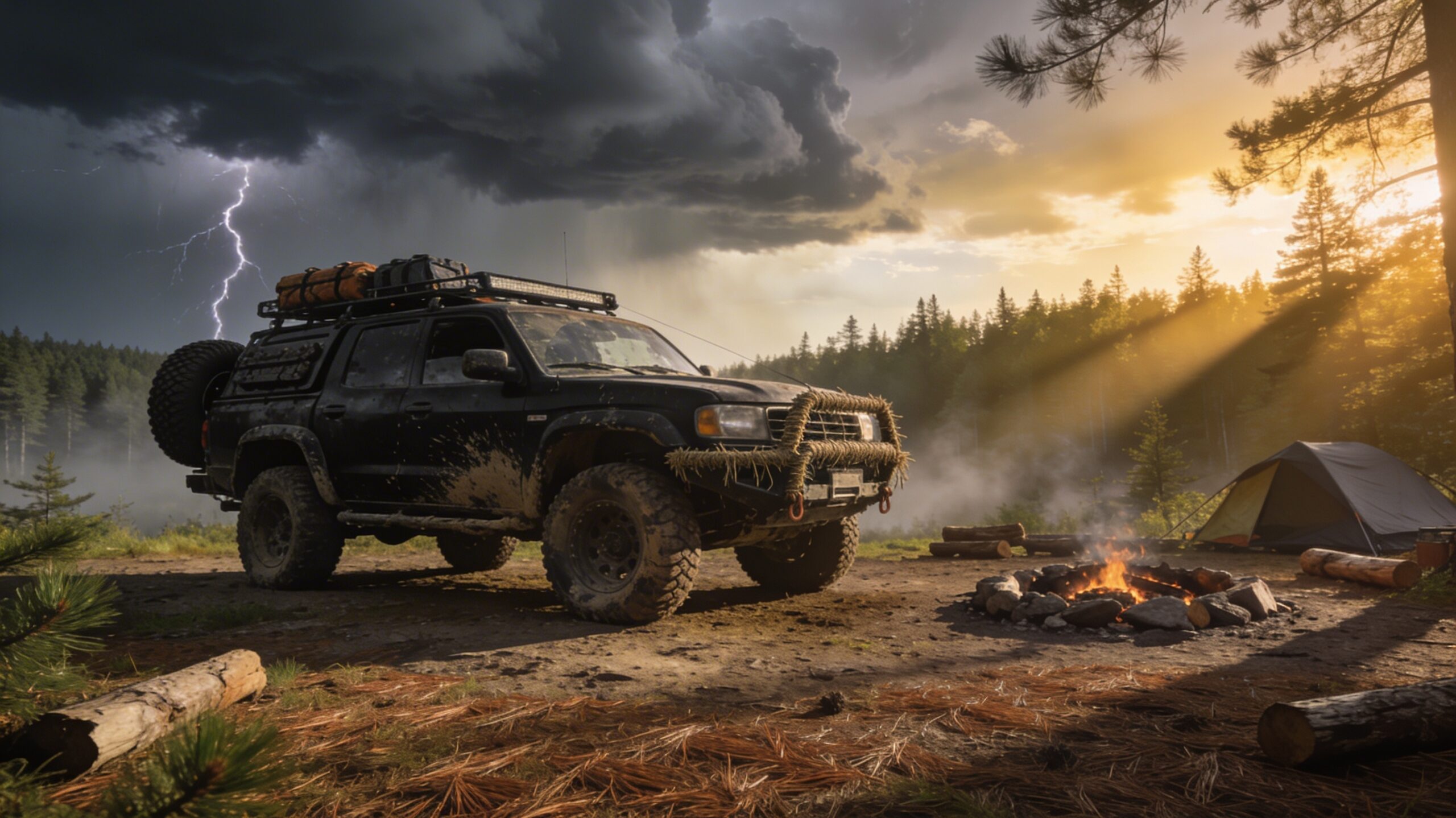
At the end of a long day wheeling through Michigan’s trails, there’s nothing better than relaxing beside a warm campfire. Whether you’re cooking dinner, drying out gear, or just swapping stories under the stars, knowing how to start a fire efficiently is one of the most essential overlanding skills.
Overlanders aren’t exactly limited by pack weight, so there’s no excuse not to carry a well-built fire starting kit. The key is balancing size, redundancy, and reliability.
What to Include in Your Fire Starting Kit
Your kit doesn’t have to be ultralight, but it should be compact enough to fit with your core camping gear. Think of it as a self-contained resource—ready to go when you need it. It should include several fire-starting tools and some backup materials that can spark a flame in tough conditions.
Pro tip: include smaller fire-starting kits in your kitchen box, first aid kit, and recovery bag. That redundancy ensures you always have a way to build a fire, even if one kit gets lost or wet.
Essential Tools for Fire Starting
Lighters:
No overland rig should roll out without a few sturdy lighters. Keep at least two types—a long-necked lighter for reaching into kindling stacks and a compact, windproof cigarette-style lighter. Look for weather-resistant options that hold up to damp conditions and wind.
Matches:
Carry both strike-anywhere matches and stormproof matches. Strike-anywhere matches are great for fair-weather fires, while weatherproof ones are indispensable when rain or snow hits. Brands like UCO make stormproof matches that stay lit even in wind and wet—perfect for unpredictable Michigan weather.
Starters (Ferro Rods and Sparking Tools):
Ferro rods, magnesium starters, and spark throwers demand a little practice but deliver reliability even when wet. They’re crucial backups if lighters fail. Keep a magnesium fire starter in every kit you assemble—insurance against the unexpected.
Fire Helpers and DIY Starters
Fire helpers are materials that catch a spark quickly and help your kindling ignite. You can buy commercial fire starters or make your own at home.
- DIY options: Dryer lint, cotton balls dipped in petroleum jelly, or even a handful of corn chips like Doritos work surprisingly well.
- Store-bought options: Compressed sawdust starters, waxed tinder cubes, and strikeable tinder sticks (like those from UCO) make clean, consistent flames.
Having a mix of these ensures that no matter the weather or fuel condition, you’ll have something that burns hot and long enough to get the fire going.
Redundancy: The Overlander’s Rule
As any seasoned overlander knows, redundancy is key. Keep at least two secondary fire kits stashed in different gear areas. Each should contain a lighter, stormproof matches, and a compact tinder source.
If your primary kit gets soaked or misplaced, you’ll be thankful for those backups. Fire isn’t just about comfort—it’s safety, warmth, and the heart of camp life.