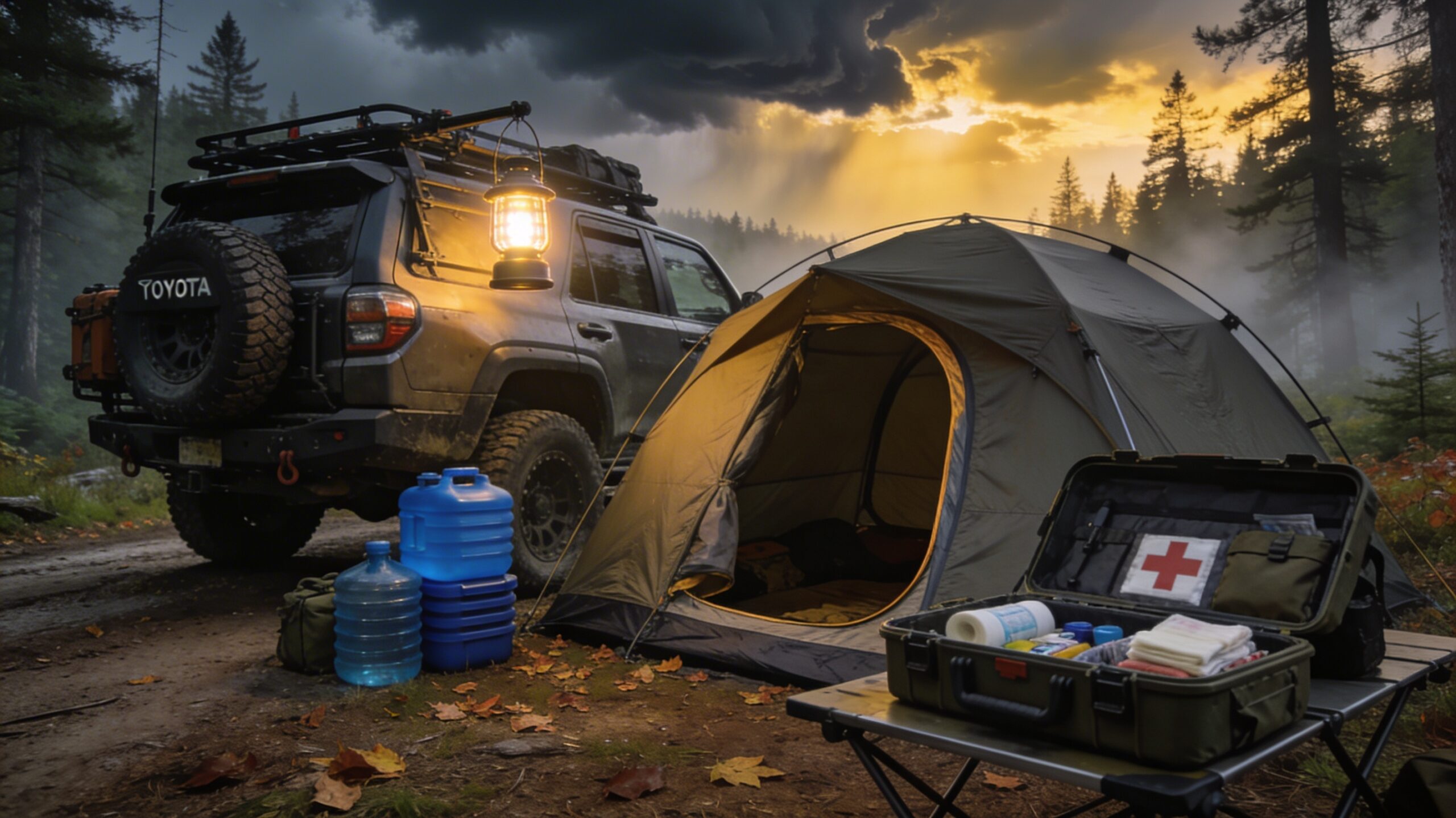
Within the preparedness triangle, Get Home Bags and Bail Out Bags represent the point where travel shifts from vehicle to foot. This could mean walking from a workplace back home during a disruption or leaving a disabled vehicle in the backcountry to reach a major road. Although they share some overlap, GHBs and BOBs are not the same and should be built around different durations and objectives.
A Get Home Bag is generally a short‑term kit designed to support a single mission: moving safely from Point A to Point B, usually within a 24‑hour window. A Bail Out Bag is structured as a longer‑term survival pack, built to support several days of movement and overnight stays when conditions are unknown or help is delayed. Together, they add a crucial layer of flexibility to a system that already includes Everyday Carry and Vehicle Everyday Carry.
Carrying and Organizing GHB and BOB Gear
Many overlanders choose to stage gear for both bags in a single, rugged container—such as a hard trunk or storage bin—kept in the back of the vehicle. Items can be broken into clearly labeled kits (for example, “GHB,” “BOB,” or “Both”) using durable zip‑top bags. This approach makes it easy to quickly assemble the appropriate bag based on the situation, while keeping everything organized and protected from moisture and dirt.
The trunk or container should be readily accessible in the vehicle, recognizing that this may not be ideal in every scenario. Accessibility, vehicle layout, and personal preference will influence where and how these bags are stored.
Conducting an Assessment
Building both a Get Home Bag and a Bail Out Bag starts with an assessment similar to the one used for Vehicle Everyday Carry, but with extra attention to traveling on foot. Key factors include:
- Type of terrain likely to be crossed (pavement, sidewalks, trails, grass, uneven ground).
- Estimated time needed to travel from Point A to Point B.
- Total distance between usual start and end points.
- Priority in an emergency (for example, reaching family, home, or a specific safe location).
- Typical and seasonal weather conditions.
For many people, this might translate to a 4–6 hour walk over mostly urban terrain, covering 15–20 miles, with priorities centered on reaching loved ones and home safely. In different regions or job locations, terrain could be more rural, distances longer, and exposure more severe, all of which drive different packing choices.
Breaking Gear into Functional Kits
To keep bags organized and adaptable, contents can be grouped into smaller functional kits. These kits can then be marked for use in the GHB, BOB, or both, and stored together in a larger 24‑hour‑style pack. Common top‑level kit categories include:
- Fire
- Food & water
- Survival
- Cooking
- Tools
- Shelter
- Medical
- Lighting
- Clothing
- Navigation
- Communication
- Electronics
- Sundries (hygiene, comfort, miscellaneous)
- Other (books, notebook, extra bags, etc.)
This modular approach allows a user to grab only what is needed for a shorter get‑home scenario, or everything for a longer, uncertain trek.
Get Home Bag (GHB) Contents
A Get Home Bag is typically built to sustain about 24 hours, with enough flexibility to stop, rest, or shelter briefly if needed. The exact number of hours or miles it must cover depends on the personal assessment, but the core idea is a focused, streamlined kit.
A representative GHB might include:
Fire Kit
- Regular matches
- Stormproof matches
- Lighter
- Magnesium fire starter
- Tinder
- Small bag of fire starter (for example, Instafire)
- A few pieces of fatwood
Food & Water
- One dehydrated meal
- Several protein or energy bars
- A few bottles of water
- A small amount of jerky or similar snack
Cooking
- Compact backpacking stove and fuel
- Lightweight eating utensils
- Small cooking pot or cup
Tools
- Folding knife
- Multitool
- Heavy‑duty tape (for example, Gorilla tape)
- Paracord
Shelter
- Hammock or simple shelter option
- Inflatable sleeping pad
- Inflatable pillow
- Lightweight blanket or small sleeping bag
Medical
- Small to medium first‑aid kit appropriate for one person
Lighting
- Headlamp
- Handheld flashlight
- One or more chemical light sticks
- Spare batteries
Clothing
- Wool socks
- Durable footwear or boots (if not already worn)
- Baseball hat or cap
- Lightweight rain gear
Navigation
- Local map
- Compass
Communication
- Handheld HAM radio or long‑range radio, where licensing and regulations allow
The Get Home Bag can be supplemented with items already on the person (EDC) or stored in the vehicle. Seasonal clothing, such as winter gear, may be worn rather than packed to save space and weight.
Bail Out Bag (BOB) Contents
A Bail Out Bag is designed for longer, more uncertain situations—such as leaving a disabled vehicle in the woods and traveling on foot to reach a main road or populated area. Because the duration is unknown, a BOB often aims to cover at least 72 hours with a stronger emphasis on shelter, water, food, and medical support.
Typical BOB contents might include:
Fire Kit
- Regular matches
- Stormproof matches
- Multiple lighters
- Magnesium fire starter
- Tinder
- Several bags of fire starter
- Multiple pieces of fatwood
Food & Water
- Several dehydrated meals
- Multiple protein or energy bars
- Instant coffee or other drink mixes
Survival
- Water purification tablets
- Water filtration straw or filter
- Metal water bottle
- Hydration bladder
- Signal mirror
- Chemical light sticks
- Safety whistle
- Hand and body warmers
Cooking
- Backpacking stove and fuel
- Eating utensils
- Cooking pot or cup
Tools
- Folding knife
- Fixed blade knife
- Multitool
- Folding shovel
- Heavy‑duty tape
- Paracord
- Zip ties
- Folding saw
- Camp axe or hatchet
- Wire saw
Shelter
- Hammock sleep system
- Inflatable sleeping pad
- Inflatable pillow
- Sleeping bag appropriate to the climate
- Emergency blanket
- Tarp
- Compact emergency shelter
Medical
- Comprehensive first‑aid kit (bandages, gauze, wraps, etc.)
- Tourniquet
- Hemostatic agent (such as QuickClot‑type products)
- Insect repellent
- Pain relievers
- Medication for diarrhea and fever
- Antibiotic ointment
- Laxatives, as needed
- Trauma shears
- Medical gloves
- Tweezers
Lighting
- Headlamp
- Flashlight
- Multiple chemical light sticks
- Spare batteries
Clothing
- Rain gear
- Several pairs of wool socks
- Boots (if not worn)
- Bandana
- Leather work gloves
- Baseball cap or brimmed hat
- Sunglasses
Navigation
- Regional maps
- Compass
Communication
- Handheld HAM radio or similar device
Electronics
- Solar charger
- Battery pack or power bank
Sundries
- Toilet paper
- Baby wipes
- Toothbrush and toothpaste
- Glasses case
- Hand sanitizer
- Baby powder
- Sunscreen
Other
- Notebook
- Pen and pencil
- Small book for morale
- Trash bags
- Zip‑top bags
- Mosquito netting
Like the GHB, the Bail Out Bag can be supplemented with items from the vehicle kit, camping gear, or personal carry. Depending on regulations and personal choices, some individuals may also include defensive tools when appropriate and legal.
Adapting for Family and Changing Needs
GHBs and BOBs are not static; they should evolve as routes, family situations, and gear preferences change. When family members are present, the amount of food, water, shelter, and medical supplies must increase accordingly, and additional age‑appropriate items (such as children’s clothing or comfort items) may be necessary.
It is helpful to review and update both bags several times a year, checking expiration dates, rotating food and batteries, and adjusting clothing and gear for seasonal weather shifts. Over time, this process turns GHBs and BOBs into reliable, familiar tools that fit naturally into a broader preparedness triangle—alongside Everyday Carry, Vehicle Everyday Carry, and shelter‑in‑place planning.