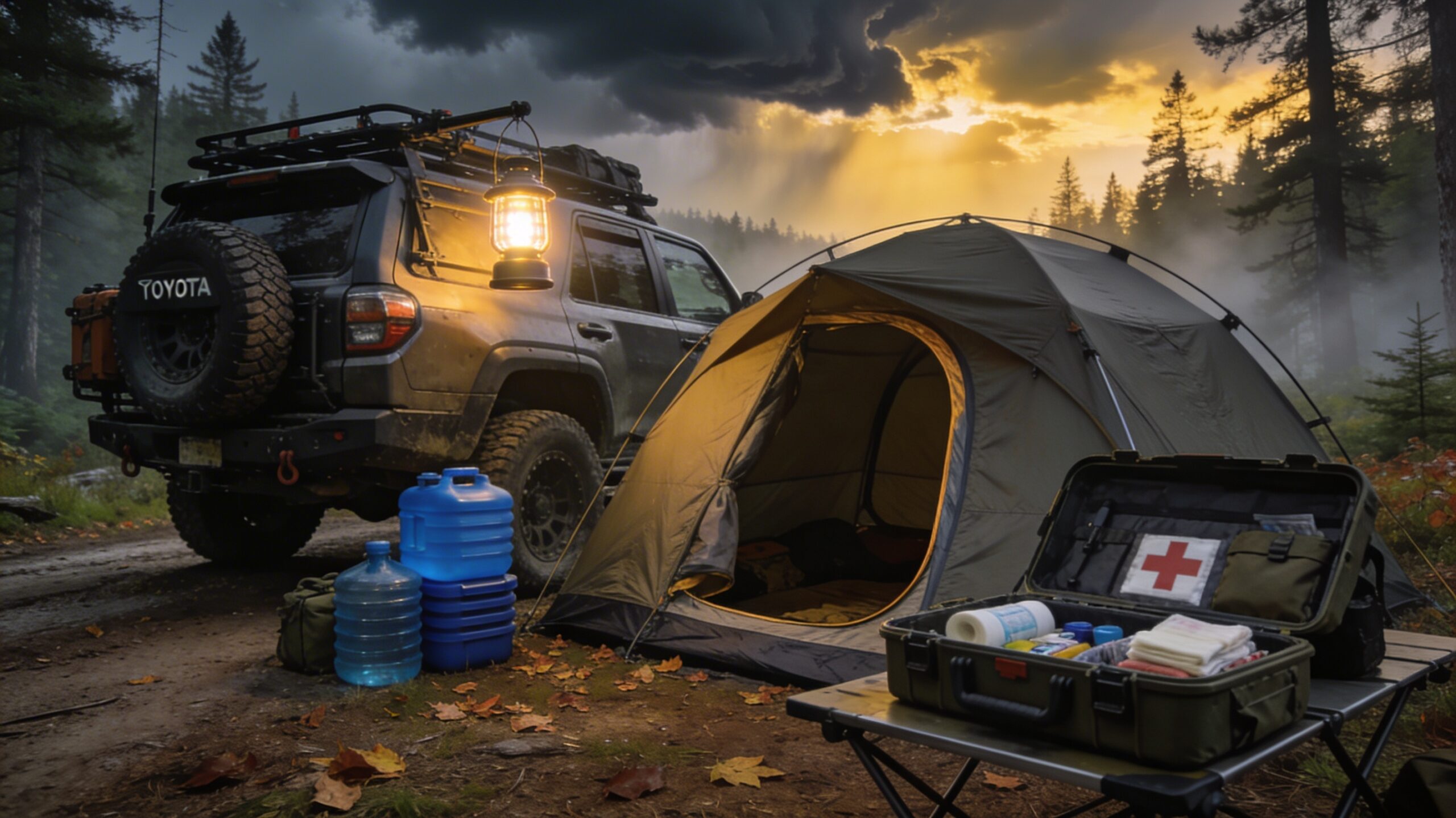
Preparedness is not about paranoia; it is a practical mindset that becomes essential when adventures lead into Michigan’s forests, sand, and seasonal roads. Most overlanders already depend on what is in and around their vehicles to stay safe, comfortable, and capable when conditions change unexpectedly.
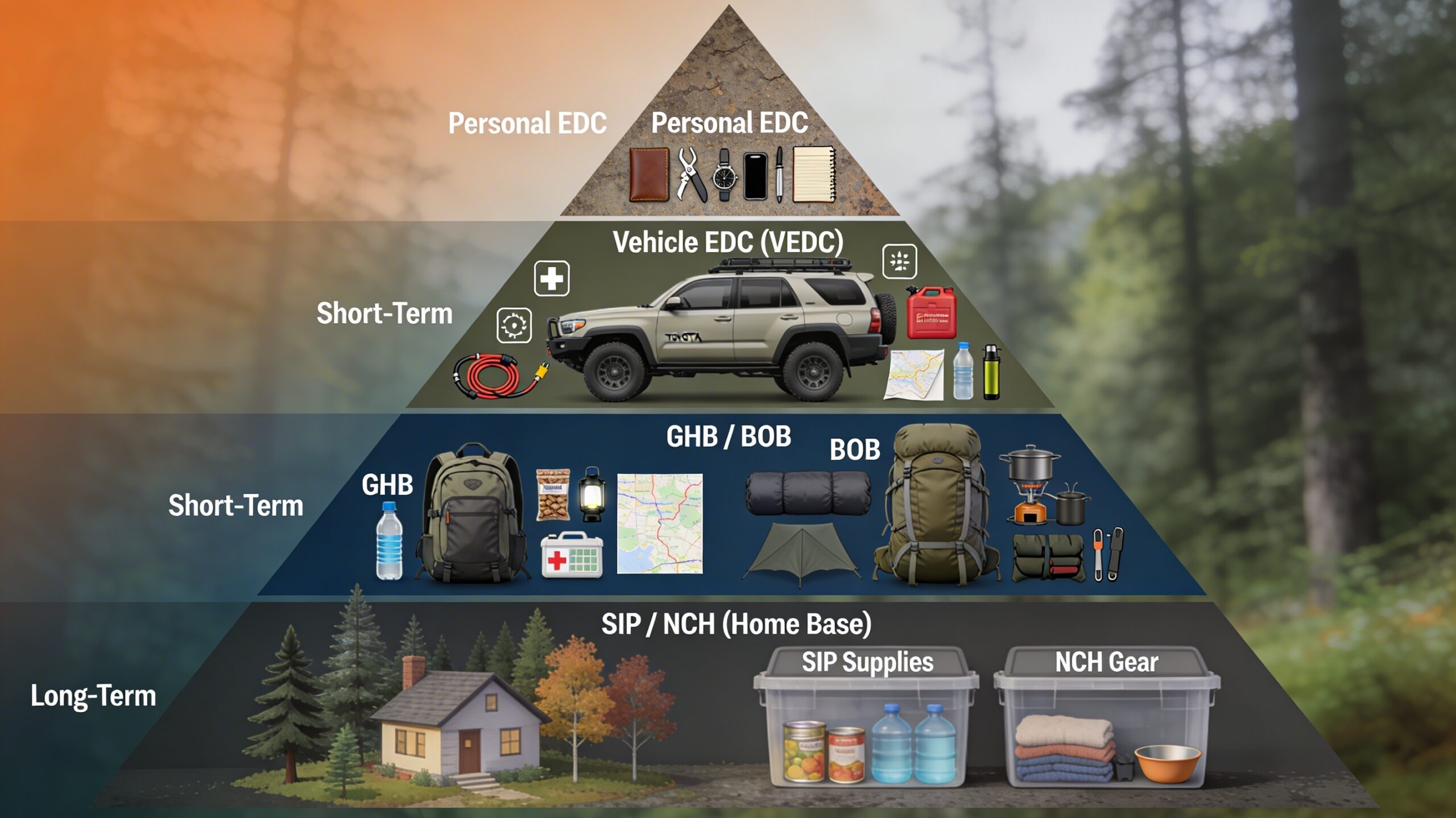
A useful way to understand this mindset is through a four-level preparedness triangle, with each level adding capability on top of the previous one. The objective is consistent: return home or reach a safe location. Depending on whether a person is at work, commuting, or traveling off-grid, they may move up or down within this triangle as the situation demands.
Much of preparedness is driven by personal preference: what is carried, how it is organized, and who is included in the planning. The sections below outline a structured philosophy for each level of the triangle, with linked resources on Michigan Overland that provide deeper, gear-specific guidance.
Level 1: Personal Everyday Carry
Everyday Carry (EDC) forms the base of individual preparedness. It consists of practical tools and essentials kept on one’s person every day, whether heading to work, running errands, or leaving for a weekend on forest roads.
Most people already practice a minimal form of EDC by carrying a wallet, keys, and phone. An intentional EDC expands on this with items such as a small knife or multitool, compact flashlight, lighter, pen, and notebook—tools that make it easier to solve minor problems before they escalate into emergencies.
For a detailed breakdown of example EDC loadouts and reasons behind each item, see:
Level 2: Vehicle Everyday Carry
The vehicle serves as the next layer of the preparedness triangle and acts as an extension of personal EDC. Vehicle Everyday Carry (VEDC) consists of practical, useful items stored in the vehicle to support both daily commuting and extended overland travel, without overloading the rig.
A well-thought-out VEDC typically addresses:
- Minor mechanical issues and breakdowns (basic tools, spare fuses, fluids, jumper cables).
- Roadside and trail safety (warning triangles, tire repair equipment, air source, recovery strap).
- Short-term comfort and safety (compact first-aid kit, extra water, warm layers, and rain protection).
The exact setup will vary based on commute length, how remote typical routes are, Michigan’s highly variable weather, and the density of nearby services and population.
Level 3: Get Home Bag and Bail Out Bag
The third level of the triangle introduces two purpose-focused kits: the Get Home Bag (GHB) and the Bail Out Bag (BOB). While gear may overlap, each serves a distinct role within a preparedness system.
A Get Home Bag is built around a single mission—moving safely from Point A to Point B, most commonly from a workplace or travel location back to home. It is typically designed to sustain 24–48 hours of movement and may include water, calorie-dense food, a change of socks, basic first aid, light sources, and navigation tools.
A Bail Out Bag is intended for longer-term survival when leaving a vehicle or home becomes necessary. This type of kit is often viewed as a “bug-out” solution and may contain approximately three days of food and water, shelter components, fire-starting gear, extra clothing, and an expanded medical kit.
For more on configuring each bag, contents, and use cases, see:
Level 4: Not Coming Home and Shelter in Place
The base of the triangle represents the most serious scenarios, where careful planning has the greatest impact. This level addresses two primary possibilities: the inability to return home at all, or the need to remain in place until conditions improve.
“Shelter in place” refers to staying where one currently is—at home, at work, or in another building—until an emergency passes. In Michigan, this can be triggered by events such as severe winter storms, flooding, or larger regional situations that restrict travel.
The “not coming home” scenario assumes a rapid departure from home toward a designated safer location. In this case, preparedness often involves organizing essential supplies into clearly labeled bins that can be quickly grabbed and loaded into a vehicle. This level of planning typically includes:
- A predetermined bug-out or rally location.
- Sufficient food, water, and essentials for several days of independent living.
- A clear, documented plan that indicates who is responsible for specific items and where they are stored.
More detail on strategies for both sheltering in place and leaving home is available here:
The Family Factor
Preparedness systems change significantly when family members, especially children, are part of travel and daily life. Gear quantity increases, and additional considerations such as age-appropriate clothing, extra food, medications, and comfort items must be incorporated into planning.
Robust family-oriented preparedness often includes:
- A dedicated Get Home Bag in each regularly used vehicle.
- Individual bags for children, scaled to what they can reasonably carry and tailored to their needs.
- Family communication and meetup plans that are simple to understand and easy to follow under stress.
Preparedness for overlanding is ultimately about building layers of capability long before they are needed, so that unexpected events feel manageable instead of overwhelming. By intentionally developing each level of the preparedness triangle—from personal EDC and vehicle-based gear to purpose-built bags and home or evacuation plans—overlanders can travel Michigan’s backroads, seasons, and weather with greater confidence, safety, and resilience.