Solo overlanding has its appeal—the solitude, the freedom to set your own pace, the sense of self-reliance. But when it comes to safety, learning, and long-term adventure, there’s real value in having a trusted group by your side. A core team can make the difference between a trip that’s stressful and one that’s smooth, productive, and full of shared memories.
Why a Dedicated Group Matters
Traveling with others means shared responsibilities on the trail and at camp. A group can pool gear, knowledge, and problem-solving ability to handle challenges—from recovery situations to dinner prep—more effectively than one person ever could. Above all, a reliable crew builds safety into every trip and gives you the confidence to explore more remote or demanding routes.
Just as important is the social side. You’re out there for days, sometimes weeks, sharing space, delays, and unexpected weather. A positive, team-focused group turns those challenges into stories you’ll tell for years.
Defining Your Group’s Purpose and Philosophy
Before building your team, define what kind of travelers you are. Is your group about exploration and discovery? Family and community time? Skill-building and self-reliance? Agreeing on a shared philosophy helps shape everything from trip styles to decision-making on the trail.
Setting group goals early ensures everyone’s expectations line up—pace, destinations, risk tolerance, and even gear standards. For instance, some crews aim to log long remote routes, while others prioritize scenic stops or family-friendly camps. Clear expectations save a lot of frustration later.
Finding the Right People
Start close to home: local overland clubs, off-road events, or social media groups like Michigan Overland. Regular meetups and trail days are great opportunities to test group chemistry before committing to longer trips.
When evaluating potential teammates, look for:
- Shared values and goals – similar ideas of what makes an adventure meaningful.
- Reliability and flexibility – people who show up and adapt when plans change.
- Safety mindset – members who prioritize responsible choices on and off the trail.
- Experience level and learning attitude – both seasoned travelers and curious newcomers can add value.
- Good humor and patience – essential when you’re airing down in the rain.
Start small—one or two short weekend trips—to build rhythm and learn each other’s strengths.
Key Roles to Fill
Dividing responsibilities helps trips run smoother and makes planning less stressful. No one needs to wear just one hat, but each person should know their focus area.
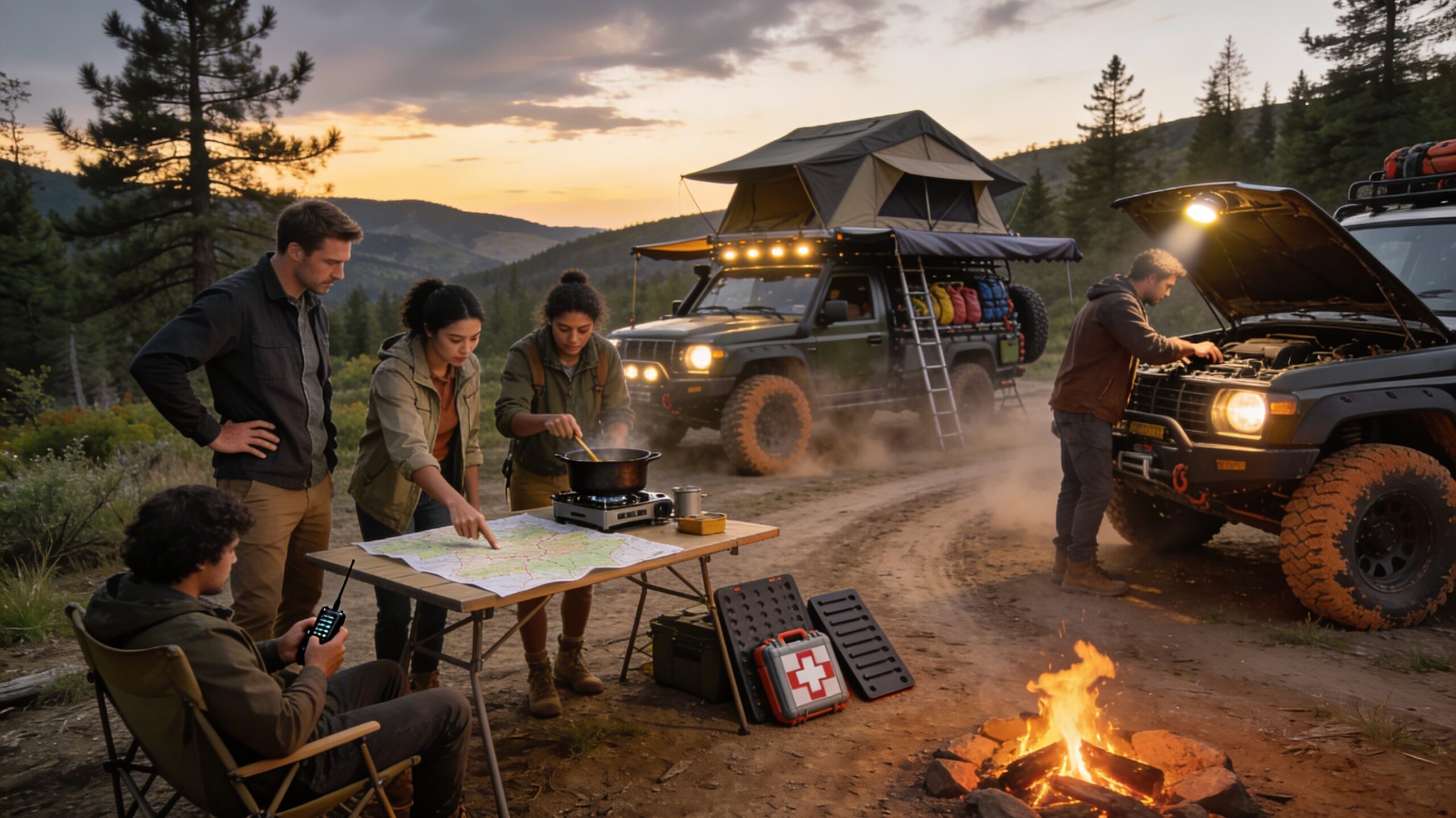
- Trip Leader / Trail Boss – Oversees the route, logistics, and final decisions when needed.
- Navigator / Communications Lead – Handles mapping, GPS routing, and coordination between vehicles.
- Mechanic – Keeps an eye on vehicle condition before and during travel.
- Chef / Camp Cook – Manages meal planning, preparation, and morale through food.
- Safety & First Aid Lead – Tracks first aid kits and leads response during injuries.
- Media / Documentation – Captures photos, video, or written reflections to share the story later.
Having these roles defined ahead of time keeps everyone engaged and invested in the trip’s success.
Communication and Collaboration
Respectful, open communication is the heart of any good team. Plan routes, gear lists, and meals together before leaving. On the trail, check in regularly about pace and comfort levels. Disagreements will happen—address them early, listen to everyone’s perspective, and focus on solutions over ego.
Over time, your communication style becomes second nature, especially if you make a habit of post-trip debriefs to identify what worked and what didn’t.
Building Skills Together
A strong group invests in each other. Consider hosting small workshops or practice days for recovery techniques, first aid refreshers, or bushcraft basics. These sessions not only build competence but strengthen camaraderie and trust—skills that are invaluable when conditions get tough out on the trail.
Growing the Group
Once you’ve established a stable, well-functioning core, you can look at bringing new members in. But make sure your foundation—your purpose, communication, and teamwork—is strong first. New additions should complement, not disrupt, what you’ve built.
Final Thoughts
Overlanding is about more than vehicles and gear—it’s about people who share a mindset of exploration, respect, and support. A core group turns a simple road trip into an adventure community. Build yours thoughtfully, invest in one another, and you’ll go farther—together.