Dispersed camping is one of the best ways to experience Michigan as an overlander — free, remote, and far from the crowds. But it comes with responsibilities and rules that help keep these places open for all of us.
What Is Dispersed Camping in Michigan?
Michigan is packed with campgrounds across both the Upper and Lower Peninsulas, from full-service state parks to rustic forest campgrounds. Those are great when you want amenities, but most of the time when you’re overlanding, you’re not in a developed campground at all — you’re dispersed camping.
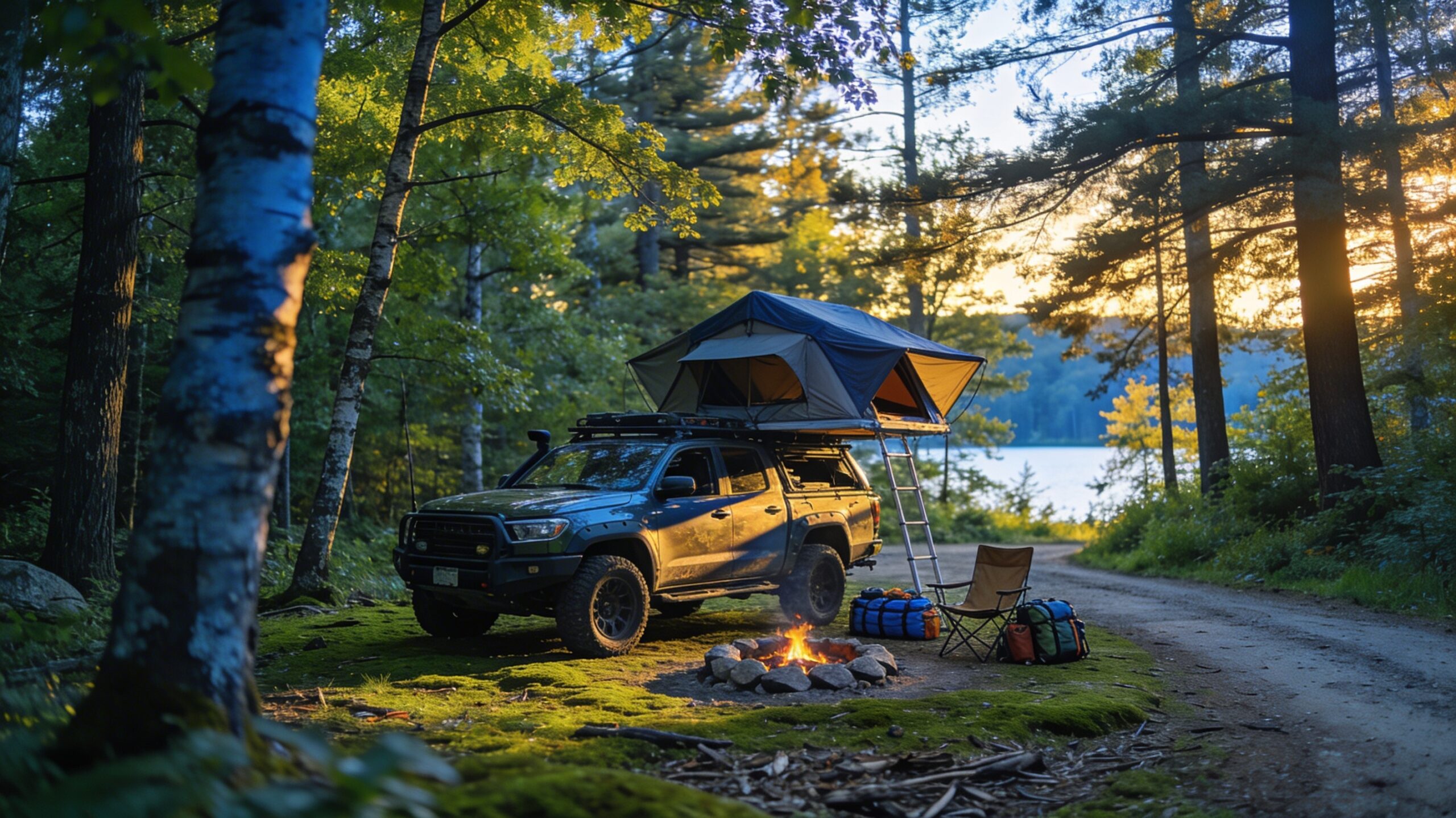
Dispersed camping means setting up camp outside of designated campgrounds on public land, with no hookups, no bathhouses, and no camp hosts. You’re entirely self-sufficient, including bathrooms, water, trash, and power. One big perk: dispersed camping on eligible state and national forest land in Michigan is typically free, unlike reservable developed sites.
Pack In Pack Out & Leave No Trace
Before getting into the legal side of dispersed camping, every overlander should be on the same page about Pack In Pack Out (PIPO) and Leave No Trace (LNT).
PIPO is simple: you bring in what you need, and you pack out everything you used, including trash, food scraps, and human waste. Leave No Trace expands on that idea with seven core principles:
- Plan ahead and prepare
- Travel and camp on durable surfaces
- Dispose of waste properly
- Leave what you find
- Minimize campfire impacts
- Respect wildlife
- Be considerate of others
The Leave No Trace organization’s website has detailed guidance for each principle, and it’s worth a read before your next trip. Between PIPO and LNT, your goal is to leave your campsite in better condition than you found it so future Michigan overlanders have the same or better experience.
Dispersed Camping vs. Rustic Camping
It’s easy to confuse dispersed camping with rustic camping, but they’re not quite the same. Rustic campgrounds still offer some minimal amenities — usually things like vault toilets, designated fire rings, and sometimes a hand pump for water.
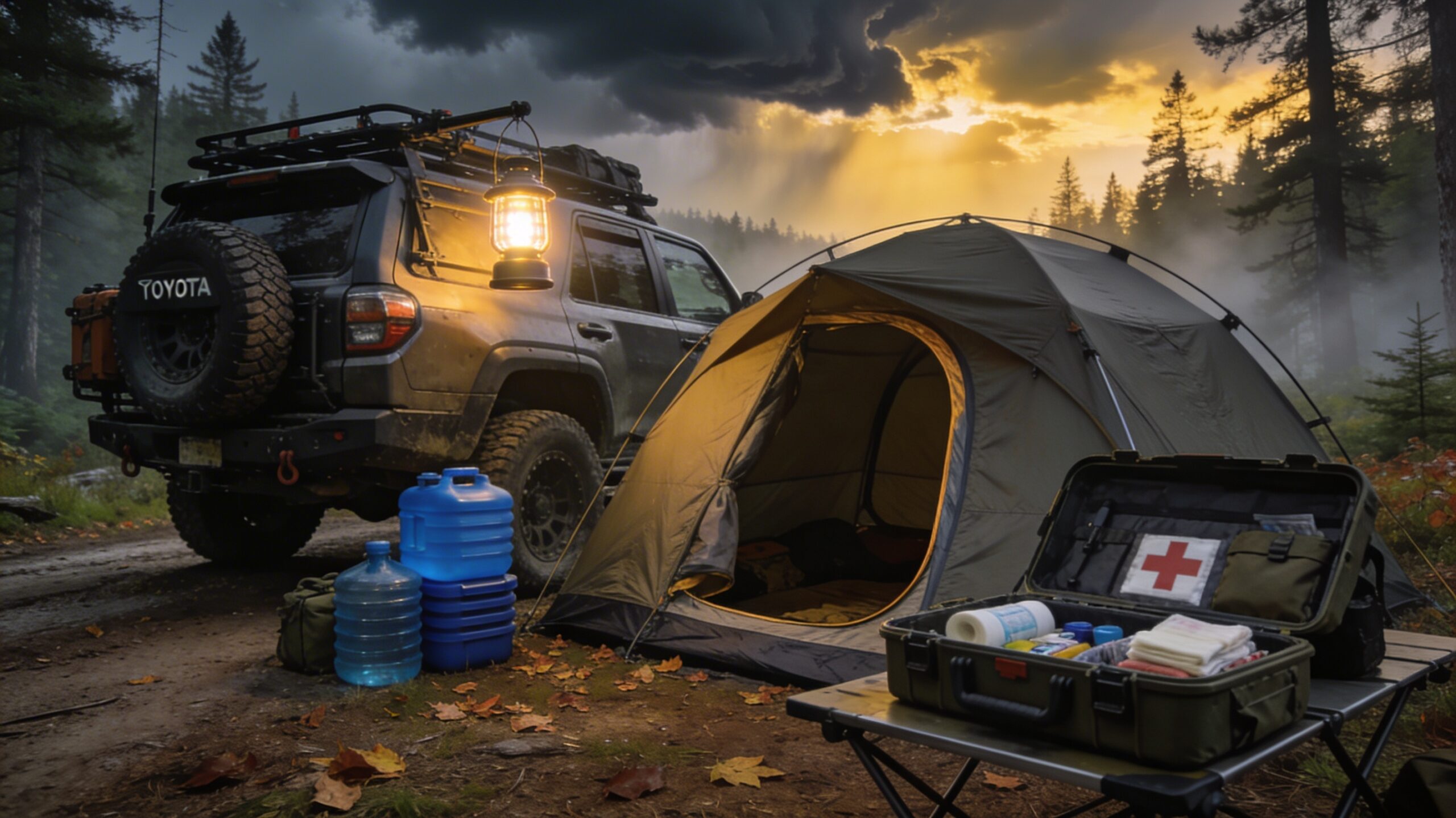
Dispersed camping, on the other hand, is true off-grid camping: no developed facilities, no numbered sites, and no on-site services. You choose a legal spot, set up camp, and rely completely on your own gear and planning. For overlanders, that means having a plan for water, waste management, fire safety, and recovery gear before you ever leave pavement.
General Michigan Dispersed Camping Rules for Overlanders
Whether you’re traveling in a 4×4, adventure bike, or SUV with a simple sleep setup, Michigan’s dispersed camping rules share some common themes: distance, time limits, and not blocking access for others.
Across most public lands that allow dispersed camping in Michigan, you’ll encounter similar expectations:
- Free camping is generally limited to state forest land and national forest land, not state parks or recreation areas.
- Your campsite must be well away from developed campgrounds; on state forest land this typically means at least one mile from a designated state forest campground.
- Do not block any roads, two-tracks, or trailheads with your vehicle, trailer, or camp setup.
- Choose previously used or durable surfaces when possible and avoid creating new ruts or tracks.
- Respect posted stay limits, which are commonly 14–16 days in one spot before you must move.
When you’re navigating with onX, Gaia, paper maps, or your preferred app, make a habit of confirming who manages the land and checking current rules for that specific forest or unit before you claim a spot.
Michigan State Forest Dispersed Camping Rules
The Michigan Department of Natural Resources (DNR) allows dispersed, or “backcountry/hike-in and vehicle-based” camping on state forest land with specific conditions.
Where You Can Camp on State Forest Land
To legally disperse camp on Michigan state forest land, you must:
- Camp only on state forest lands, not in state parks, recreation areas, or game areas.
- Set up at least one mile from any rustic state forest campground.
- Avoid any area posted with “No Camping” signs or other closure notices.
Because state parks and game areas are often intermixed with state forests, use official DNR maps or online tools to confirm you’re actually on state forest land before setting up.
Camp Registration Card Requirement
On state forest land you must fill out and display a camp registration card (state forest camp registration permit) at your campsite.
- The card is free and can be downloaded and printed from the Michigan DNR website.
- It must be completed with your name, dates of stay, and location and posted in a visible spot at your campsite for the duration of your stay.
- Many overlanders slip it into a zip-top bag and attach it to a tree, post, or their vehicle.
Skipping the registration card can result in a citation, so it’s smart to keep a few copies in your rig at all times.
Length of Stay and Moving Camp on State Forest Land
Michigan’s state land use rules limit how long you can stay in one spot:
- You can typically camp up to 15 consecutive days at a single location on state forest land during the main season.
- To be considered a new camp, your next campsite must be at least one mile from your previous campsite.
For overlanders running multi-week trips, that means you should rotate campsites regularly and keep track of how long you’ve been at each spot.
Other Key State Land Use Rules
Michigan’s state land use administrative rules add a few more considerations for dispersed camping:
- Certain sensitive areas, such as designated natural rivers or special management zones, may have additional restrictions on camping distance from water or may prohibit camping altogether.
- You must comply with all fire restrictions, including burn bans during dry conditions, and only have fires where allowed.
- Littering, damaging vegetation, or creating new vehicle routes is prohibited and can lead to fines or closures.
As an overlander, your best practice is to verify the latest DNR guidance before a trip, especially in shoulder seasons when fire danger and access can change quickly.
National Forest Dispersed Camping Rules in Michigan
Michigan is home to three national forests that are popular with overlanders: Huron-Manistee, Hiawatha, and Ottawa. All three allow dispersed camping, but with similar baseline regulations and some unit-specific nuances.
Permits, Fees, and Designated Areas
In most of Michigan’s national forest areas:
- No permit and no fee are required to dispersed camp outside of developed campgrounds.
- Some high-use zones, lakeshores, or special management areas in the Upper Peninsula may require permits or restrict camping to designated sites only.
Before your trip, check the specific national forest website (Huron-Manistee, Hiawatha, or Ottawa) for maps and current camping regulations.
Distance From Water and Sensitive Areas
Michigan’s national forests generally limit how close you can camp to water:
- In the Huron-Manistee National Forests, dispersed camping is typically not allowed within 200 feet of any lake, river, or stream, except at designated sites.
- Along certain Wild and Scenic Rivers and popular lakes, camping may be restricted to established sites only, even where dispersed camping is otherwise allowed.
These rules help protect shorelines from erosion and overuse, so when in doubt, back your rig off the water and use an existing, hardened site.
Length of Stay and Moving Camp in National Forests
Time limits in the national forests are similar to state forest rules:
- You can usually camp or leave gear in one spot for 14–16 days in a 30-day period.
- After that, you must move your camp at least five miles away or leave national forest land for the remainder of the period.
For overlanders planning multi-week loops, this rule actually works in your favor: you can structure your route to naturally move at least five miles between camps every week or so.
Where You Cannot Camp in National Forests
Even on national forest land, dispersed camping is not allowed everywhere:
- Areas posted as closed, “No Camping,” or otherwise restricted are off-limits.
- Developed recreation sites, such as campgrounds, day-use areas, and some trailheads, typically require you to use designated campsites only.
- Some lakes and high-use corridors in the Upper Peninsula have special orders that limit camping locations and distances from roads or water.
Always read local signage and check with ranger districts if you’re unsure about a particular area.
Vehicle and Roadside Camping Considerations in Michigan
Not every place you can park your rig is a legal place to camp, especially near highways and in roadside facilities managed by MDOT (Michigan Department of Transportation).
Highway Rest Areas and MDOT Facilities
Michigan allows drivers to stop and rest at highway rest areas, but:
- Camping is not allowed at MDOT rest areas or carpool lots — no tents, awnings, or outdoor camp setups.
- Rules limit how long you can remain at roadside facilities and prohibit using them as long-term living spaces or campgrounds.
For overlanders, this means rest areas are for short sleep breaks and driver fatigue management, not for overnight dispersed camping.
Road Shoulders and Forest Road Pullouts
Camping along road shoulders or in random pullouts can be legally risky:
- Roadside camping along highways and many main roads is generally illegal, even if you’re just sleeping in your vehicle.
- Some forest road pullouts within national forests can be used as dispersed campsites, but only if they are clearly within public land and not signed otherwise.
The safest approach is to confirm land ownership and rules before treating a pullout as a camp; when in doubt, move deeper into legal forest land where dispersed camping is clearly allowed.
Michigan Dispersed Camping Checklist for Overlanders
Use this as a quick mental checklist before you shut off the engine for the night:
- Confirm land type: state forest, national forest, state park, or private land.
- On state forest land:
- Camp at least one mile from a state forest campground.
- Fill out and post a camp registration card.
- Stay within the typical 15-day limit, then move at least a mile away.
- On national forest land:
- No permit or fee in most areas, but check for special regulations or permit zones.
- Camp away from water (often 200 feet or more) and respect designated-only zones.
- Follow 14–16 day stay limits and move at least five miles for your next camp.
- Everywhere:
- Don’t block roads, two-tracks, or trailheads.
- Follow fire restrictions and practice Leave No Trace.
- Avoid treating rest areas and highway shoulders as dispersed camps.
The Last Few Things to Remember
When you’re dispersed camping in Michigan, you’re often well beyond cell service, established services, and quick help.
Let someone at home know your rough route and when you plan to be back, and carry maps or offline navigation tools so you’re not dependent on a signal. Be prepared to handle your own water, waste, and recovery, and take notes after each trip about what worked and what didn’t so you can refine your setup.
If we all respect the rules, practice Leave No Trace, and camp thoughtfully, Michigan’s forests will stay open and wild for the next generation of overlanders to explore.